


Insider Trading Rules Canada: A 2026 Strategic Compliance Guide
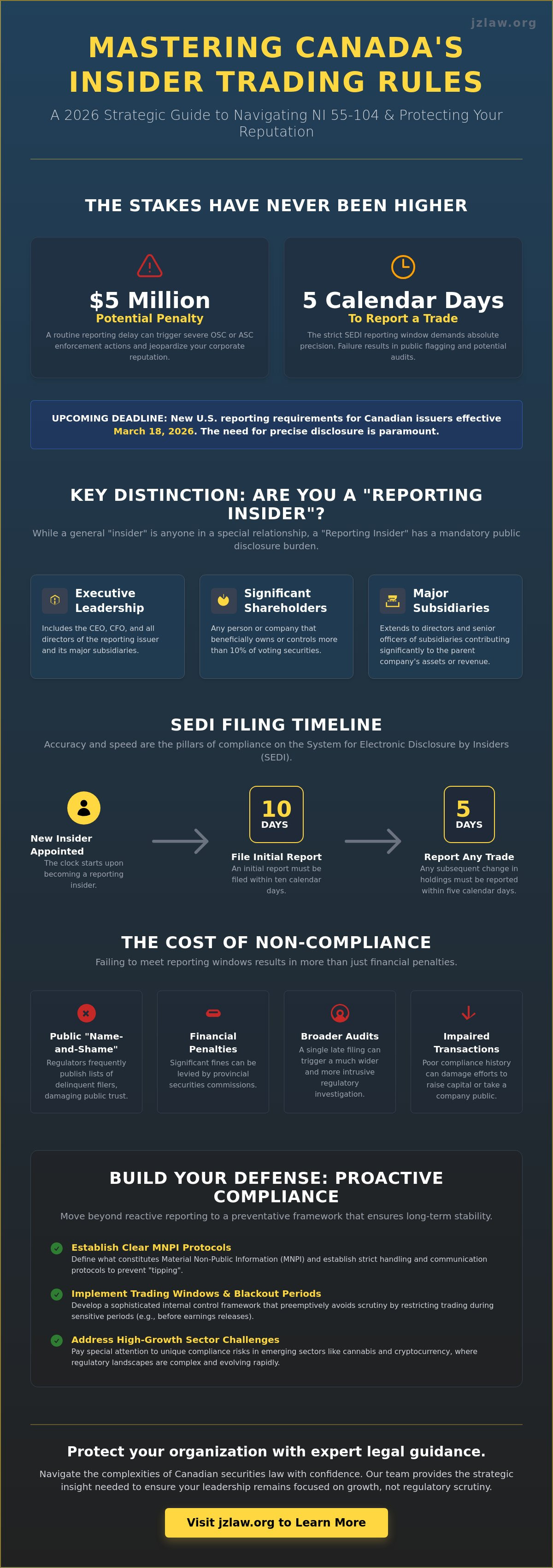
What if a five-calendar-day delay in reporting a routine trade could jeopardize your entire corporate reputation and invite a five-million-dollar penalty? Understanding the current insider trading rules canada enforces is no longer just a legal obligation; it's a vital component of your organization's strategic risk management. You likely recognize the pressure of an increasingly complex regulatory environment, where unintentional tipping or confusion over SEDI reporting can lead to severe OSC or ASC enforcement actions. With new U.S. reporting requirements for Canadian issuers effective as of March 18, 2026, the need for absolute precision in disclosure has never been more paramount.
Our 2026 strategic guide empowers you to master these complexities and protect your professional standing through expert analysis of evolving securities law. We'll clarify the nuances of reporting insider status, examine the impact of the latest CSA amendments to NI 55-104, and provide a framework for a robust internal governance structure that prioritizes long-term stability. By moving beyond reactive reporting toward a proactive, preventative mindset, you ensure your leadership remains focused on strategic growth rather than regulatory scrutiny.
Key Takeaways
Distinguish between general "insider" status and the specific "reporting insider" designation to accurately fulfill your SEDI disclosure obligations.
Master the regulatory nuances of National Instrument 55-104 to maintain a proactive stance against the evolving insider trading rules canada enforces in 2026.
Protect your corporate reputation by establishing clear protocols for Material Non-Public Information (MNPI) and identifying potential "tipping" risks within special relationships.
Address unique compliance challenges within high-growth sectors, particularly regarding cannabis licensing and the complex regulatory landscape of cryptocurrency law.
Develop a sophisticated internal control framework that utilizes strategic trading windows and blackout periods to preemptively address regulatory scrutiny.
Table of Contents
Defining Insider Trading and "Reporting Insiders" in Canada
Transparency represents the bedrock of the Canadian capital markets. It's the mechanism that fosters investor confidence and ensures that market participants operate on an equitable basis. When individuals utilize non-public information for personal gain, they undermine the very fabric of this system. This Insider Trading Overview illustrates how most jurisdictions, including Canada, define illegal conduct as trading while in possession of material non-public information (MNPI). Understanding the specific insider trading rules canada enforces is essential for any executive or major shareholder who wishes to navigate the markets without compromising their integrity.
The regulatory framework differentiates between a general "insider" and a "reporting insider." While an insider is anyone in a special relationship with the issuer, a reporting insider carries the additional burden of public disclosure. This distinction prevents the system from being overwhelmed with data while ensuring that the actions of those with the most influence remain visible to the public. It's a strategic layer of protection that helps maintain a fair marketplace for all participants.
Who Qualifies as a Reporting Insider?
Identifying who must file reports is a foundational step in corporate governance. The definition focuses on those who have both access to sensitive information and the power to influence the company's direction. Generally, this includes:
Executive Leadership: This encompasses the CEO, CFO, and all directors of the reporting issuer.
Significant Shareholders: Any person or company that beneficially owns or controls more than 10% of the voting securities.
Major Subsidiaries: The rules extend to directors and senior officers of "major subsidiaries," which are entities that contribute significantly to the consolidated assets or revenue of the parent company.
The Role of SEDI in 2026
The System for Electronic Disclosure by Insiders (SEDI) is the mandatory electronic portal for all reporting activities. Accuracy and speed are the two pillars of SEDI compliance. As of 2026, the 5-day rule remains the standard for reporting any change in an insider's holdings. This means you have exactly five calendar days from the date of the trade to complete your filing. Initial reports for new insiders must be submitted within ten calendar days. Failing to meet these windows results in more than just financial penalties. Regulators frequently publish lists of delinquent filers, which can trigger broader audits and damage corporate transactions or future efforts toward taking companies public. You don't want your name on a public "name-and-shame" list when trying to build long-term trust with investors.
The Legal Framework: NI 55-104 and Provincial Securities Acts
Canada operates without a single federal securities regulator. Instead, the legal landscape is a patchwork of provincial statutes coordinated through the Canadian Securities Administrators (CSA). This collaborative body works to harmonize the insider trading rules canada relies upon across all provinces. It creates a more predictable environment for issuers. While the goal is uniformity, subtle provincial differences persist. These nuances can create significant pitfalls for firms operating in multiple regions, particularly when dealing with differing investigative thresholds or penalty structures.
The foundational document in this space is National Instrument 55-104. This instrument standardizes reporting requirements and exemptions from Victoria to Halifax. It specifically addresses "related financial instruments" and "equity monetization," ensuring that insiders can't bypass disclosure by using complex derivatives or structured products. In 2026, the CSA proposed amendments to NI 55-104 to clarify reporting for investment funds. The public comment period for these changes ends on June 8, 2026. This reflects a commitment to keeping pace with financial innovation and ensuring no security type remains in a regulatory blind spot.
National Instrument 55-104 Explained
NI 55-104 serves as the primary regulation governing how reporting insiders must disclose their activities. It provides a consistent set of definitions across Toronto, Vancouver, and Calgary. This standardization is vital for maintaining market liquidity. It ensures that an executive in the oil and gas sector in Alberta is held to the same reporting standard as a tech founder in Ontario. The instrument also defines the scope of what constitutes a "related financial instrument," which prevents individuals from hedging their positions without public notice.
Enforcement Bodies: OSC, ASC, and BCSC
Provincial bodies like the Ontario Securities Commission (OSC) and the Alberta Securities Commission (ASC) serve as the primary enforcement arms. The Ontario Securities Act allows for a maximum fine of $5 million and nearly five years of imprisonment. In contrast, British Columbia provides for fines up to $3 million or triple the profit made. Alberta regulators maintain a sharp focus on trading within the energy sector. They often utilize their public interest jurisdiction to pursue "shadow trading" cases. By 2026, we've seen a clear shift. Regulators now prioritize disgorgement and restitution for harmed investors over purely punitive measures.
Navigating these overlapping jurisdictions requires a strategic partner who understands the granular differences between the Toronto and Calgary markets. Whether you're managing complex securities regulation or preparing for a cross-border listing, precision is your best defense. We help clients synchronize their internal policies with the specific expectations of each provincial commission to ensure seamless compliance across the country.
Tipping and Material Non-Public Information (MNPI)
The core of the insider trading rules canada enforces revolves around the concept of Material Non-Public Information (MNPI). This is information that hasn't been generally disclosed to the public and could reasonably be expected to have a significant effect on the market price or value of a security. Possessing such information places you in a "special relationship" with the issuer. This status isn't limited to executives; it extends to anyone who learns of MNPI from a person they know, or ought to know, is an insider. The legal threshold rests on a "reasonable expectation" of confidentiality, meaning the burden of discretion lies heavily on those with access to sensitive corporate data.
A common but dangerous misconception is that liability only attaches to those who personally execute a trade. This isn't the case. Under the Criminal Code Insider Trading Provisions, the act of "tipping" is a standalone offense. Sharing MNPI with another person, other than in the necessary course of business, triggers severe penalties regardless of whether the source profits from the transaction. In Ontario, for instance, tipping can lead to fines of up to $5 million or imprisonment for five years less a day. The law doesn't care if you didn't personally trade; it cares that you compromised the market's integrity by leaking privileged data.
What Constitutes "Material" Information?
Determining what qualifies as "material" requires a strategic assessment of how the market would react to the news. While every situation is unique, certain events almost always meet the criteria. These include:
Transaction Activity: Pending M&A activity, joint ventures, or other significant corporate transactions.
Financial Shifts: Unexpected earnings results, changes in dividend policy, or a sudden shift in credit ratings.
Sector-Specific Milestones: Major regulatory approvals or denials in high-growth areas like the Cannabis or Cryptocurrency sectors.
The Dangers of Tipping
Tipping often occurs in casual or social settings where the risks aren't immediately apparent. Sharing a "hint" with a family member or a friend can create a chain of liability that extends from the original source to the final trader. Each person in that chain who passes the information along while knowing its sensitive nature can be held responsible. Preventing such leakage is a critical component of managing strategic corporate transactions. Organizations must implement strict internal protocols to ensure that information stays within the necessary circle of advisors and employees, protecting both the firm's reputation and the individuals involved from life-altering enforcement actions.
Compliance Strategies for High-Growth Sectors
High-growth sectors demand a more granular application of the insider trading rules canada mandates. Standard disclosure policies often fail to account for the rapid-fire nature of news in the cannabis or digital asset spaces. In these industries, the window between information generation and market reaction is exceptionally narrow. Precision in timing isn't just a best practice; it's the difference between a successful quarter and a regulatory investigation. We've seen that generic templates don't protect executives when the underlying assets are inherently volatile.
Our approach focuses on identifying sector-specific "materiality triggers" before they become a liability. Whether it's a pending patent in the biotech space or a major supply contract in the energy sector, the goal is to create a predictable environment for insiders to manage their holdings. By establishing clear, pre-defined protocols, we help you avoid the reactive decision-making that often leads to unintentional non-compliance.
Cryptocurrency and Digital Assets
The ongoing debate regarding whether a token is a "security" or a "utility" significantly impacts compliance strategies. Under modern cryptocurrency law, regulators frequently apply a broad interpretation of "securities" to trades involving non-public protocol updates or impending exchange listings. Founders and early investors must be particularly cautious. If you're taking companies public within the digital asset ecosystem, your internal controls must address MNPI regarding smart contract vulnerabilities or governance changes before they hit the public ledger.
Cannabis and Oil & Gas Nuances
In the cannabis sector, clinical trial results or shifts in licensing status represent potent material information. Similarly, oil and gas firms face unique risks during exploration cycles. Initial resource estimation data or a successful drill result can cause immediate, significant price swings. Establishing strict internal silos is essential during these phases. Information should never cross from the technical team to the trading desk without a formal clearance process. This structural separation prevents accidental "leakage" that could trigger a probe from the ASC or BCSC during sensitive regulatory filings.
Managing these niche regulatory frameworks requires a partner who understands the technicalities of your specific sector. We don't offer generic templates; we build governance structures that reflect the actual risks of your business model. To secure your corporate future, contact our team for a strategic review of your securities regulation framework.
Navigating Enforcement and Establishing Internal Controls
An investigation by the Ontario Securities Commission (OSC) or the Alberta Securities Commission (ASC) is rarely a sudden event. It's a methodical, resource-intensive process that often begins with a quiet inquiry or a request for trading records. In the 2025 fiscal year, the Canadian Investment Regulatory Organization (CIRO) referred 11 insider trading cases to the CSA for further action. This statistic highlights that regulators are actively monitoring market anomalies with increasing sophistication. When an investigation moves into a formal stage, the disruption to corporate operations and the potential for reputational damage are significant. Strategic compliance isn't just about avoiding a final fine; it's about preventing the investigative process from ever being triggered by maintaining a clean regulatory profile.
Establishing an Automatic Securities Purchase Plan (ASPP) serves as a critical defense for executives. These plans allow insiders to schedule trades in advance, effectively removing the element of discretion that often invites scrutiny. Because the trades are executed by an independent broker according to a pre-set formula, they provide a credible shield against allegations that a specific transaction was timed based on non-public information. Integrating these plans into your broader insider trading rules canada strategy demonstrates a commitment to transparency that regulators value during audits. It shifts the narrative from reactive defense to proactive, principled governance.
Establishing a Corporate Trading Policy
A robust internal policy is your first line of defense. This document shouldn't just sit in a handbook; it must be a living part of your corporate culture. We recommend implementing the following pillars to ensure your team remains compliant:
Defined Blackout Periods: Prohibit trading for at least 30 days prior to the release of quarterly and annual financial results. These periods should extend until at least two full trading days after the news has been disseminated to the public.
Mandatory Pre-Clearance: Require senior management and directors to obtain written approval from a designated compliance officer before any trade. This ensures a "second set of eyes" reviews the transaction for potential MNPI conflicts.
Ongoing Training: Conduct annual sessions to refresh employees on the definitions of tipping and "special relationships." Ignorance is never an acceptable defense in a securities tribunal, and regular education mitigates the risk of unintentional violations.
JZ Law: Your Strategic Regulatory Partner
John Zang provides the sophisticated counsel required to navigate high-stakes governance in complex sectors. We don't just help you check boxes; we act as a strategic partner to build a proactive risk mitigation framework. Whether you're dealing with the intricacies of oil and gas reporting or the emerging requirements of cryptocurrency law, our focus remains on protecting your reputation and operational freedom. Precision in compliance allows you to focus on growth without the looming threat of regulatory intervention. Contact JZ Law today for a comprehensive audit of your internal controls and ensure your organization meets the highest standards of securities regulation.
Strategic Governance as a Competitive Advantage
The regulatory environment in 2026 demands more than just basic adherence to the law; it requires a proactive, strategic approach to risk. By mastering the insider trading rules canada mandates, your organization transforms compliance from a burden into a symbol of corporate integrity. This guide has detailed how identifying reporting insider status and establishing rigorous internal controls, like ASPPs and earnings blackouts, can preemptively address OSC or ASC scrutiny. Whether you're navigating the volatility of the cannabis market or managing the complexities of cryptocurrency law, the difference between stability and scrutiny lies in the precision of your internal protocols.
John Zang provides the specialized counsel necessary to protect your reputation in high-stakes sectors. With deep expertise in securities regulation and a local presence in Calgary, Toronto, and Vancouver, we help you synchronize your business objectives with the latest legal requirements. Secure your corporate governance with expert counsel from JZ Law and ensure your organization is prepared for the challenges of tomorrow's capital markets. You can move forward with the confidence that your strategic interests are supported by rigorous legal analysis and a commitment to professional excellence.
Frequently Asked Questions
What is the maximum penalty for insider trading in Canada?
Maximum penalties vary by jurisdiction but are severe across the country. In Ontario, the Securities Act allows for fines up to $5 million and imprisonment for up to five years less a day. British Columbia's legislation permits fines of up to $3 million or triple the profit made, alongside a potential three-year prison term. These figures underscore the high stakes involved in maintaining corporate compliance and personal integrity.
Can I be charged with insider trading if I did not make a profit?
You can be charged with insider trading even if your transaction results in a significant financial loss. The offense is defined by the act of trading while in possession of material non-public information, not by the success of the trade itself. Regulators focus on the breach of market integrity. This means that a poorly timed trade can still lead to life-altering legal consequences and permanent reputational damage.
What is the "Special Relationship" rule in Canadian securities law?
The "special relationship" rule encompasses anyone with access to sensitive data, including directors, officers, and employees of the issuer. It also extends to individuals who learn of material information through an insider, such as consultants, legal advisors, or family members. This broad definition ensures that the insider trading rules canada enforces capture anyone who could potentially compromise the fairness of the capital markets through privileged access.
How long do I have to report a trade on SEDI?
Reporting insiders have exactly five calendar days from the date of the trade to file a report on the System for Electronic Disclosure by Insiders (SEDI). Initial reports for new insiders must be submitted within ten calendar days. These deadlines are strict and don't account for holidays or weekends. Late filings often result in automatic administrative penalties and inclusion on public delinquency lists maintained by provincial commissions.
Is tipping illegal if the person I told never actually traded?
Tipping is a standalone illegal act regardless of whether the recipient of the information executes a trade. The law prohibits the communication of material non-public information to another person except in the necessary course of business. Even if your contact never acts on the tip, the mere disclosure of the information creates significant legal liability for the source. This highlights the necessity of maintaining strict confidentiality protocols at all times.
Are crypto tokens subject to insider trading rules in Canada?
Canadian regulators increasingly classify digital assets as securities, making them subject to the same insider trading regulations as traditional stocks. If a token or protocol update constitutes material non-public information, trading based on that data is prohibited. Founders and developers must be particularly vigilant. Exchange listings or technical milestones often meet the materiality threshold used by the OSC and other provincial bodies during their investigations.
What are blackout periods, and are they legally required?
While not explicitly mandated by securities legislation, blackout periods are a standard requirement of robust corporate governance. These periods prohibit trading during sensitive times, such as the weeks leading up to financial results. Implementing these windows provides a vital layer of protection for the organization. It helps demonstrate that the firm takes proactive steps to prevent accidental violations and maintain market trust through disciplined internal controls.
How does the OSC detect illegal insider trading activities?
The Ontario Securities Commission utilizes sophisticated market surveillance technology to identify unusual trading patterns that precede major corporate announcements. They also rely on referrals from the Canadian Investment Regulatory Organization (CIRO) and whistleblower tips. Once an anomaly is flagged, investigators use their subpoena powers to review communication logs and brokerage records. This multi-layered detection system makes it increasingly difficult for illegal activities to remain unnoticed in modern markets.



Comments