


M&A Lawyer Toronto for Tech Companies and Deal Timelines
Most private-company M&A deals in Ontario close within 3 to 6 months from the letter of intent. For tech companies, an M&A lawyer in Toronto can help manage that timeline, since diligence findings, financing conditions and third-party consents are common sources of delay.
A deal rarely moves forward on timing alone. Buyers and sellers need to align on structure, value, risk allocation, and the information needed to assess the business, all while keeping daily operations moving. It’s reasonable to want clarity about how long the process may take and what could disrupt it.
This article explains the stages that shape a tech M&A timeline, how asset and share deals can differ, and when common deal-killers may arise in Toronto and Ontario. It also covers what legal counsel can contribute at each stage, from preparing for due diligence and negotiating key terms to identifying issues that could affect closing. The goal is to help you approach a potential sale or acquisition with a practical plan, rather than rely on a generic timeline.
Table of Contents
Technology transactions
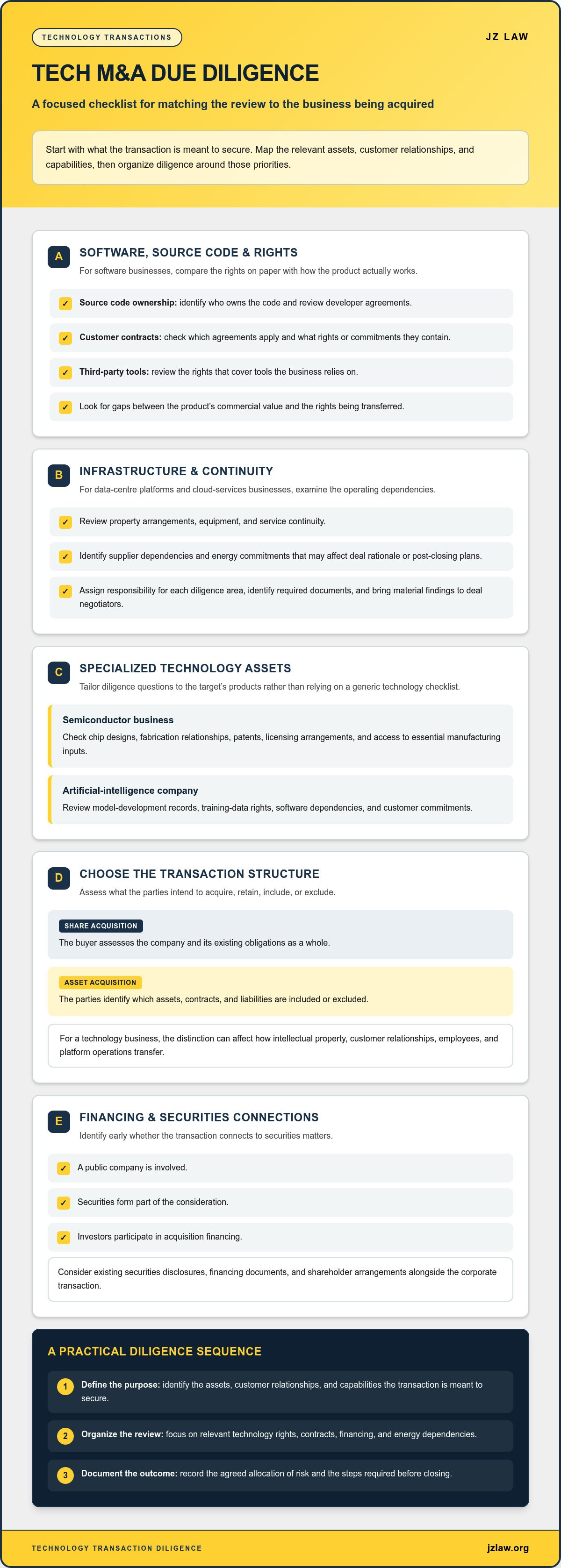
Technology-sector M&A turns on more than revenue and customer growth. A software acquisition, for example, may depend on who owns the source code, what developer agreements provide, which customer contracts apply, and what rights cover third-party tools. Buyers should map those assets early and compare written agreements with how the business actually operates. This can reveal gaps between a product’s commercial value and the rights being transferred.
Digital infrastructure deals raise different operational questions. A buyer assessing a data-centre platform or cloud-services business may examine property arrangements, equipment, service continuity, supplier dependencies, and energy commitments. These factors can affect both the deal’s strategic rationale and post-closing plans. A practical due-diligence workstream assigns responsibility for each area, identifies the required documents, and brings material findings to the people negotiating the deal.
Technology and semiconductor acquisitions require close attention to specialised assets. For a semiconductor business, the review may cover chip designs, fabrication relationships, patents, licensing arrangements, and access to essential manufacturing inputs. For an artificial-intelligence company, it may include model-development records, training-data rights, software dependencies, and customer commitments. These examples help buyers tailor due-diligence questions to the target’s products instead of relying on a generic technology checklist.
Transaction structure should reflect what the parties intend to acquire and retain. In a share acquisition, the buyer assesses the company and its existing obligations as a whole. In an asset acquisition, the parties identify which assets, contracts, and liabilities are included or excluded. For a technology business, that distinction can affect how intellectual property, customer relationships, employees, and platform operations transfer. An M&A lawyer in Toronto for tech companies can help translate commercial priorities into transaction documents and negotiation points.
Securities and capital-markets issues can also shape technology transactions. They may arise when a public company is involved, securities form part of the consideration, or investors participate in acquisition financing. Identify early whether the deal connects with existing securities disclosures, financing documents, or shareholder arrangements. Securities Regulation advice can address those questions alongside the corporate transaction, rather than treating financing and acquisition terms as separate workstreams.
A disciplined process connects the business case to focused legal review. Start by defining the assets, customer relationships, and capabilities the transaction is meant to secure. Organise due diligence around those priorities, including technology rights, contracts, financing, and energy dependencies where relevant. Then document the agreed allocation of risk and the steps required before closing. This sequence helps investors and management assess the same transaction on a consistent, decision-ready basis.
Joint ventures, carve-outs, and take-privates
A joint venture lets two businesses pursue a defined opportunity while retaining separate operations. A Toronto software company might contribute its platform, while an international partner brings distribution or market access. The parties should specify each contribution, decision rights, funding responsibilities, ownership of new intellectual property, and how to resolve deadlock. An agreed exit process matters too, since one partner may later want to sell or change direction.
For a technology business, governance should match the venture’s commercial purpose. Identify which decisions require shared approval, who manages day-to-day work, and how budgets or strategic plans are approved. For example, a venture developing an energy-management platform may need clear responsibility for product development, data access, customer support, and future investment. These terms help the partners assess the arrangement before committing resources.
A carve-out separates a business unit or asset group from a larger company. The operation may rely on shared staff, software, facilities, customer agreements, or accounting systems. First map those dependencies, then decide which will transfer, remain shared, or be replaced. Transitional services can bridge some operational gaps, but the parties should define their scope, duration, service standards, and transition responsibilities.
Private equity acquisitions bring investment objectives into the transaction structure. A fund may acquire a controlling interest alongside management or combine a target with another portfolio company. The parties should align governance, management roles, financing, and the fund’s intended holding strategy. For founders, the key points include retained equity, decision-making authority, transfer restrictions, and how proceeds from a future sale may be allocated.
Private mergers and acquisitions also include corporate buyers seeking technology, talent, or entry into a new market. Their priorities can differ from an investment fund’s: a strategic acquirer may focus on integrating products, teams, and customer relationships. Sellers can prepare by identifying which assets drive value and which obligations could complicate integration. This keeps negotiations focused on the business rationale.
A take-private transaction moves a public company into private ownership. The parties must plan around the company’s investors, financing structure, management, and communications. An arrangement may be considered when the deal involves a broader combination or reorganisation, with terms shaped by the parties’ objectives and the company’s circumstances. Taking a company public or private connects corporate strategy with securities and capital-markets considerations.
Public and private financings may support different stages of these transactions. Before negotiations advance, map the proposed funding sources, investment conditions, and any securities used as consideration. Then align financing documents with the acquisition terms and closing sequence. For tailored corporate transaction planning, focus the discussion on the transaction structure, ownership goals, and operational dependencies that will shape execution.
Transactions in Toronto, the Greater Toronto Area, and Ontario
For a Canadian technology acquisition, assess whether the Competition Act or Investment Canada Act creates review or notification requirements for the specific deal. Due diligence should also examine intellectual property, privacy, cybersecurity, and employee arrangements that could affect value or integration.
Strategic Advice on Canadian M&A
Strategic advice starts by connecting the transaction’s purpose to its structure. A Toronto software company seeking a product capability may prioritise intellectual property and developer retention, while a private equity investor may focus on governance, financing, and a future exit. Identify the intended outcome first, then test whether the proposed purchase terms support it.
For Ontario businesses, a practical review also considers tax structuring, existing agreements, and post-closing decision rights. Prepare a short transaction map showing the buyer, target, principal assets, financing sources, and approvals under consideration. It gives executives and investors a shared basis for assessing risk and resolving competing priorities.
Domestic and Cross-Border Transactions
A domestic transaction involving Ontario companies still requires careful coordination of the target’s contracts, operations, and ownership structure. For example, a Toronto-based buyer may acquire a technology firm with customers and staff elsewhere in Canada. Confirm which entity owns each asset, where key agreements sit, and which teams must support the transition.
Cross-border deals add another layer of coordination. A foreign acquirer considering a Canadian technology business should assess the Competition Act and Investment Canada Act at the outset, including whether the parties, control structure, and business activities trigger review or notification issues. Align Canadian due diligence with the international buyer’s schedule, financing conditions, and transaction documents. A national acquisition plan does not replace analysis of the specific deal.
Public and Private Company Deals
Public-company transactions involve securities, investor communications, and the target’s existing disclosure context. Before advancing terms, identify whether the consideration includes shares, how financing will be coordinated, and which decisions depend on shareholder or other approvals. These points influence the timetable and the order in which the parties can complete key steps.
Private-company deals often allow more direct negotiation between owners and buyers, but due diligence remains central. A founder selling a Canadian software company should organise ownership records, customer contracts, and material financing documents. Private equity buyers may also assess management’s continuing role and the proposed equity arrangement. In either case, align the purchase agreement with the commercial deal.
Technology Deal Issues in Canada
For intellectual property, trace ownership of software, patents, product designs, and development work to the relevant agreements. Compare those records with the technology actually used in the business. For privacy and cybersecurity, review data practices, access controls, incident records, and contractual commitments. These checks help identify obligations that could affect integration or customer relationships.
Employee due diligence should cover role descriptions, compensation arrangements, confidentiality terms, and rights connected to work product. A technology acquisition, for example, may depend on developers whose agreements determine how code and inventions are handled. Record each issue, its business impact, and the proposed response. This gives the negotiation team a clear basis for allocating responsibility.
Use a transaction-specific structuring review to connect Canadian regulatory, ownership, and operational considerations before final documents are settled.
Acquisitions, sale processes, and divestitures
A Toronto tech acquisition may involve a share purchase, asset purchase, statutory amalgamation, or sale of a business unit. Most private-company M&A deals in Ontario close within 3 to 6 months from the letter of intent.
Acquisition Due Diligence
Legal due diligence for a Toronto technology acquisition examines corporate records, ownership, material contracts, financing documents, employment arrangements, and intellectual property rights. Compare company records with actual operations, including who owns the software, how customer agreements can be transferred, and whether financing terms affect closing.
For a cross-border acquisition of a Canadian target, coordinate the Canadian review with the buyer’s internal and international deal teams. Flag contractual consent requirements, changes of control, pending disputes, and obligations that could affect the purchase agreement. A written issues list helps negotiators distinguish closing conditions from matters addressed through representations, indemnities, or post-closing commitments.
Preparing for an Acquisition or Sale
A Toronto tech startup preparing for a sale should first organise its corporate records, capitalisation details, key customer agreements, and intellectual property documents. Reconcile ownership records with equity grants and financing documents, then identify contracts requiring consent or notice if control changes.
Next, prepare a concise data room indexed by topic and assign a responsible person to each document set. A founder can also explain recurring revenue, product dependencies, and customer concentration clearly. These materials help potential buyers assess the business efficiently and give management a consistent basis for answering due-diligence questions.
Hidden Acquisition Costs and Liabilities
Purchase price is only one element of a technology acquisition’s financial impact. Buyers should assess assumed liabilities, unpaid obligations, contract termination costs, required system separation, and commitments to employees or customers. For example, a low-cost software platform may depend on a vendor agreement that requires renegotiation after a change of control.
Translate each finding into a transaction response. Depending on the issue, the agreement can allocate responsibility through conditions, specific covenants, holdbacks, or indemnity language. Financial and operational teams should also model integration needs, including data migration, product support, and duplicated services. This gives decision-makers a fuller view of the capital required after closing.
Toronto M&A Legal Support
Toronto mergers and acquisitions lawyers help structure the process, prepare and negotiate the agreement, coordinate due diligence, and track closing conditions. The work varies by deal: a share purchase transfers ownership of the company, while an asset purchase identifies which assets and liabilities transfer.
In Canadian legal usage, a merger is an amalgamation in which two or more corporations combine by statute into one continuing corporation. A lawyer can help assess which structure fits the parties’ objectives and coordinate corporate approvals and closing documents. For a seller, early advice can also establish a sale process and help management stay focused on running the business.
Common deal-killers and when they arise
Due-diligence findings, financing conditions, and third-party consents commonly delay private-company M&A deals. Unresolved issues can change negotiating leverage, financing plans, or the path to closing, so their timing matters.
Common Deal Risks and Terms
Due diligence may uncover a material contract requiring consent, a gap in software ownership, or customer commitments that conflict with the buyer’s plan. Financing conditions can also delay signing or closing if required funding is unavailable or documents remain incomplete. Identify each issue early, assign an owner, and track its effect on the agreement and closing conditions.
Third-party consents need active attention. A key cloud provider, customer, or landlord may need to approve a change of control or contract transfer. If approval is delayed, determine whether the agreement allows a waiver, alternative arrangement, or revised closing plan.
Earn-outs can bridge differences over a technology company’s future performance, but the agreement should define the metric, measurement period, reporting access, and decision-making after closing. Representations address specified facts about the business, while indemnities set out how certain losses may be handled. Clear definitions, limits, procedures, and responsibility for claims help prevent disputes after closing.
M&A deal rankings and awards may offer context about a law firm’s market profile, but they do not explain how counsel would handle a particular software acquisition. Compare the proposed legal team’s experience with the transaction type, industry, and issues in scope. A complex deal involving a public company, international investors, or multiple financing sources needs a process suited to those details, not a label such as “leading.”
Tax and Deal Structuring
Consider tax and deal structuring before settling on a purchase method or final agreement. A share purchase and an asset purchase can allocate assets, obligations, and proceeds differently. Examine how each structure interacts with ownership, financing, assumed liabilities, and the seller’s objectives.
For a technology company, the analysis may also involve intellectual property, employee arrangements, customer contracts, and assets connected to real estate. Identify the intended transaction structure, then map the assets and obligations it affects. This gives the business and its advisers a focused basis for assessing financial and operational consequences.
Tax Structuring advice can help connect those considerations to the proposed deal structure. Discuss tax structuring for your transaction before unresolved allocation questions become obstacles in negotiations or closing documents.
JZ Law: John Zang Services
JZ Law is a point of contact when a technology transaction raises securities or public-market considerations. For example, a company weighing a future public listing may need to consider how its financing plans and securities obligations fit its broader strategy. JZ Law offers Securities Regulation and Taking Companies Public, services that may be relevant when those issues form part of the company’s next steps.
Bring a clear outline of the transaction, its current stage, and the decisions requiring legal input. That context helps focus the discussion on the issues affecting the business, whether the priority is securities-related or planning for a future listing. For advice connected to these matters, contact JZ Law to discuss your next steps.
Set Your Next Deal in Motion
Turn the transaction’s goals into a clear mandate: identify the decisions that need legal input, the people responsible, and the business priorities that must guide negotiations. An M&A lawyer in Toronto for tech companies can help connect those priorities with the transaction’s structure and documentation.
JZ Law offers John Zang Services, including Cannabis Licensing and Taking Companies Public. These services may be relevant when a technology business operates in the cannabis sector or is considering a future public-market path. For a transaction-specific discussion, bring the key commercial objectives and the questions affecting your decisions.
Contact JZ Law about your deal to discuss the next step for your business. A clear starting point can help you approach the process with purpose.
Frequently Asked Questions
How long does an M&A transaction take?
Most private-company M&A deals in Ontario close within 3 to 6 months from the letter of intent. The schedule depends on how quickly the parties settle key terms, provide requested records, arrange financing, and address required consents. For example, a buyer may need extra time to reconcile inconsistent ownership records before finalising documents. A shared timetable with named owners for each open item helps keep decisions moving.
How much does an M&A lawyer cost?
The fee depends on the matter’s scope. Factors include transaction structure, document volume, due-diligence requirements, negotiation complexity, and whether financing or securities matters are involved. JZ Law uses a fixed-fee format for its services. Before proceeding, clarify what the proposed scope covers, such as drafting, negotiation, closing documents, and responses to due-diligence findings.
What are the hidden costs when buying a company?
Beyond the purchase price, buyers should budget for costs associated with transferring operations and meeting obligations uncovered during due diligence. Examples include contract-transfer work, accounting or tax support, employee transition planning, and replacing services previously shared with the seller. A buyer acquiring a subscription software business may also need to plan for customer communications and platform changes. Build a post-closing cost checklist alongside the purchase-price analysis.
Which Toronto law firms specialize in M&A for technology companies?
JZ Law offers Corporate Transactions, Securities Regulation, and Taking Companies Public. For a technology transaction, assess whether counsel can explain relevant deal structures and address software ownership, customer agreements, financing, and closing conditions. An M&A lawyer in Toronto for tech companies should also clarify their role in comparable transactions, the proposed team’s responsibilities, and how complex issues will be communicated. This helps you assess fit without relying on a firm label alone.
What are typical M&A lawyer fees in Toronto for technology company transactions?
There is no single fee that fits every technology-company transaction. Scope, structure, due-diligence workload, negotiation, and financing arrangements all affect the legal work required. When choosing an M&A lawyer in Toronto for tech companies, clarify the proposed fee’s scope and how changes in the work will be handled. JZ Law uses a fixed-fee format for its services, with listed amounts on its Practices tab.
What credentials and deal experience should a tech company look for when choosing an M&A lawyer in Toronto?
Look for counsel who can explain their role in relevant acquisitions, sales, or financings and describe the issues they handled. Ask how they approach technology-specific matters, such as software rights, customer contracts, employee arrangements, or securities considerations. Clarify who will lead negotiations, prepare documents, coordinate due diligence, and report open issues. A useful discussion connects the lawyer’s experience to your transaction’s structure and commercial priorities.
What are the steps in a Canadian technology company acquisition or sale?
A typical process moves from planning to agreed terms, due diligence, definitive documents, required approvals, and closing. Start by setting transaction objectives and preparing key company records. Then negotiate a letter of intent, organise due diligence, resolve material issues, and finalise the purchase agreement. The parties complete agreed closing conditions and transfer ownership or assets. After closing, assign responsibility for customer, employee, and operational transitions.



Comments