


Mergers and Acquisitions Lawyer Alberta: Strategic Counsel for 2026 Transactions
- jzanglaw
- Jul 17
- 12 min read
Updated: 7 days ago
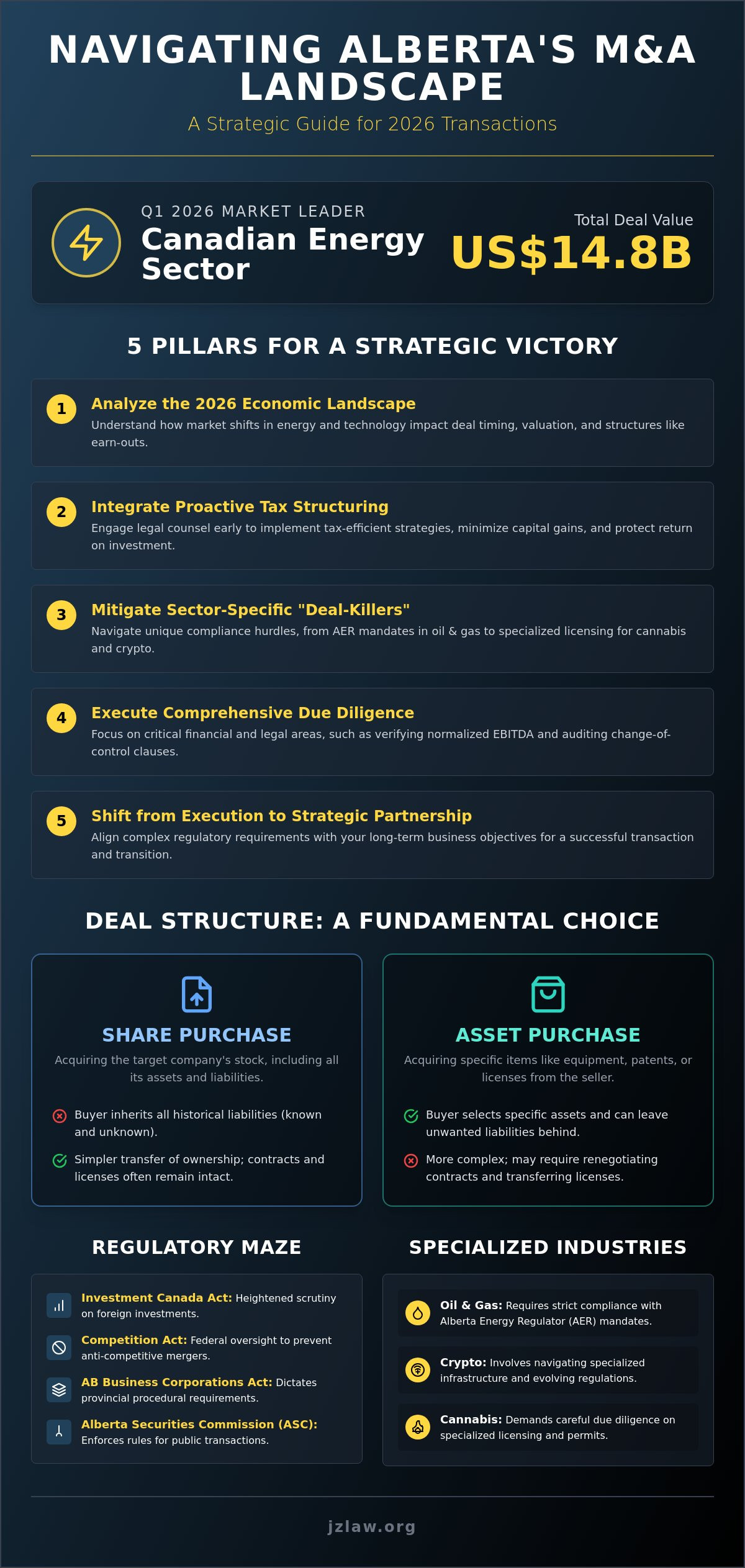
In the first quarter of 2026, the Canadian energy sector led the market with US$14.8 billion in deal value, signaling a robust yet increasingly complex environment for corporate growth. Successfully closing a deal in this climate requires more than just standard documentation. Engaging a skilled mergers and acquisitions lawyer alberta is essential for transforming a standard transaction into a strategic victory. You likely understand that a single oversight in regulatory filing or a slight inefficiency in tax structuring can jeopardize months of negotiation and erode significant shareholder value.
We agree that the current regulatory landscape, characterized by heightened scrutiny under the Investment Canada Act and specific Alberta Energy Regulator mandates, demands a proactive approach rather than a reactive one. This guide promises to equip you with the insights needed to navigate these hurdles while maintaining deal momentum. We will explore advanced tax structuring techniques, compliance strategies for niche industries like cannabis and cryptocurrency, and the critical steps for ensuring a seamless transition of ownership in 2026.
Table of Contents
The Alberta M&A Landscape: Regulatory and Economic Context in 2026
Mergers and acquisitions in Alberta represent the strategic consolidation of corporate entities where businesses seek to enhance market share, acquire intellectual property, or achieve operational synergies through various financial transactions. In 2026, this process is governed by a sophisticated interplay of market forces and rigid legal frameworks. Selecting a seasoned mergers and acquisitions lawyer alberta ensures that your transaction isn't just a transfer of ownership but a carefully architected business move that accounts for the province's unique economic climate.
In the Canadian context, the distinction between asset and share purchases remains fundamental to deal success. A share purchase involves acquiring the target company's stock, which typically means the buyer inherits all historical liabilities. Conversely, an asset purchase allows the buyer to select specific items, such as equipment, patents, or cannabis licenses, while often leaving behind unwanted legal obligations. The choice between these two structures carries significant tax implications that must be addressed during the earliest stages of negotiation.
Regulation in 2026 operates through a dual-layered system. Federal oversight via the Competition Act ensures that large-scale mergers don't stifle market competition, particularly in critical sectors like energy and telecommunications. Locally, the Alberta Business Corporations Act dictates the procedural requirements for amalgamations and arrangements within the province. This regulatory environment is becoming increasingly complex, making precise legal guidance a necessity for any serious transaction.
Why Alberta M&A Requires Local Expertise
The Alberta Securities Commission (ASC) plays a pivotal role in public transactions, enforcing rules that protect investors while facilitating capital flow. Local experts understand the nuances of provincial tax incentives, such as those designed for Alberta-based tech startups and innovation hubs. Whether you're operating in the Calgary or Edmonton business centers, local market knowledge is the difference between a stalled deal and a successful closing. We focus on these provincial specifics to ensure your compliance is beyond reproach.
Key Economic Drivers for 2026 Transactions
2026 sees intense consolidation within the Western Canadian Sedimentary Basin as energy firms seek scale to manage evolving environmental compliance costs. Simultaneously, Calgary's innovation sector is witnessing a surge in tech-driven acquisitions, particularly in AI-integrated energy services and cryptocurrency infrastructure. Interest rate shifts in early 2026 have pushed deal structures toward earn-outs and vendor take-back loans. These models allow buyers to manage capital costs more effectively while aligning the interests of both parties after the deal closes.
Structuring the Deal: Integrating Securities and Tax Law
The initial term sheet often captures the spirit of a deal, but the underlying legal structure determines its ultimate financial success. Moving beyond the preliminary agreement requires a deep understanding of how different transaction models impact long term return on investment. A strategic tax structuring plan is not merely an administrative step; it's a fundamental component of value preservation that minimizes capital gains and prevents the erosion of proceeds. For many Alberta businesses, an acquisition serves as a critical stepping stone toward taking companies public. Aligning your current M&A strategy with future public listing requirements ensures that your corporate records and share structures are audit ready from the outset.
Securities regulation also plays a surprisingly active role in private M&A transactions. Whenever shares are issued as part of the purchase price, the deal must comply with specific exempt market rules. A qualified mergers and acquisitions lawyer alberta will align these securities requirements with your broader corporate objectives, ensuring that every share transfer is legally sound and properly documented with the relevant authorities.
Tax-Efficient Acquisition Strategies
Maximizing the value of a sale often involves utilizing the Lifetime Capital Gains Exemption (LCGE). This can provide significant tax relief for shareholders of qualified small business corporations. We also frequently employ Section 85 rollovers to allow for the tax deferred transfer of assets into a corporation, which is essential during complex reorganizations. When a gap exists between the buyer's offer and the seller's valuation, we structure earn-outs. These must be drafted with precision to ensure they're treated as capital gains rather than taxable employment income, balancing risk while protecting the seller's tax liability. If you are preparing for a sale, reviewing your corporate transaction strategy early can uncover significant savings.
Securities Compliance in Private Deals
Private acquisitions can trigger securities disclosure requirements if the transaction involves a large number of shareholders or complex share exchanges. Navigating the 'close personal friend' and 'accredited investor' exemptions is vital to avoid the need for a full prospectus, which is both time consuming and costly. We ensure all necessary Alberta Securities Commission (ASC) filings are completed accurately and on schedule. This proactive compliance prevents regulatory delays that could otherwise jeopardize the closing timeline or lead to post closing litigation.
Specialized Industry M&A: Oil, Gas, Crypto, and Cannabis
Generalist legal advice often fails when confronted with the highly regulated sectors that define Alberta’s economy. While a standard corporate attorney can draft a purchase agreement, they may lack the specialized insight to identify industry specific "deal killers" that emerge during the due diligence phase. Whether you're dealing with environmental liabilities in the energy sector or the strict background checks required by the AGLC, an experienced mergers and acquisitions lawyer alberta provides the tactical depth necessary to secure a successful outcome. We don't just review documents; we act as strategic partners who understand how industry specific regulations can alter the valuation and viability of a deal.
Energy Sector M&A in Alberta
Transactions in the energy sector require a rigorous analysis of AER compliance and environmental stewardship. In 2026, the transfer of mineral rights and surface leases is no longer a routine procedure. The Alberta Energy Regulator now applies heightened scrutiny to liability transfers, particularly regarding orphan well obligations and reclamation bonds. Buyers must verify that the target company has sufficient financial security to cover future abandonment costs. Failing to account for these liabilities can turn a seemingly profitable asset deal into a long term financial burden. We ensure that every energy transaction includes a thorough audit of regulatory standing and environmental exposure, protecting our clients from unforeseen reclamation costs that could jeopardize the transaction's ROI.
Emerging Tech and Regulated Markets
The cannabis and cryptocurrency sectors present unique hurdles that demand a modern, strategic approach to M&A. In cannabis acquisitions, the focus shifts to retail licensing and ensuring new owners pass the "fit and proper" tests mandated by provincial regulators. With Alberta’s transition to a consignment model in June 2026, larger producers are consolidating the market, making AGLC approval timelines a critical factor in deal execution. Any delay in license transfer can result in significant revenue loss during the transition period.
Similarly, cryptocurrency acquisitions must address blockchain regulatory standards and FINTRAC reporting requirements. As Alberta formalizes its footprint for crypto operations on public lands, as seen in the May 2026 procedural updates, buyers must evaluate existing power generation infrastructure and land use permits. Protecting intellectual property and managing cross border data privacy are paramount in these tech heavy mergers. We help clients navigate these complexities by bridging the gap between innovative business models and the rigid requirements of the Canadian legal system, ensuring that every digital asset and license is properly accounted for in the final agreement.
The M&A Due Diligence Checklist: Avoiding Deal-Breakers
Due diligence isn't just a discovery phase; it's a defensive strategy designed to validate every assumption made during the valuation process. Once a term sheet is signed, the focus shifts to a rigorous audit of the target company’s health. A mergers and acquisitions lawyer alberta ensures that the buyer isn't inheriting a litigation time bomb or a regulatory nightmare. To complement legal oversight, many firms discover Swiss Alpha Matrix for specialized due diligence and project management of complex investment programmes. This phase requires a methodical approach to uncover risks that aren't immediately visible on a balance sheet, and we recommend a five step framework to ensure no stone is left unturned:
Step 1: Financial audit and verification of 'normalized' EBITDA. It's vital to scrutinize adjustments for one time expenses or owner salaries to ensure the purchase price reflects the true earning potential of the business.
Step 2: Legal review of material contracts. We examine change of control clauses that might allow key suppliers or customers to terminate their agreements upon a change in ownership.
Step 3: Regulatory standing check. This involves verifying compliance with the AER, AGLC, or FINTRAC to confirm there are no outstanding fines or active investigations.
Step 4: Employment and labor law review. Buyers must understand successor employer obligations, including accrued vacation pay, severance liabilities, and the status of any union agreements.
Step 5: Environmental and real estate law assessments. In Alberta, contaminated sites or restrictive covenants on commercial property can halt a transaction or lead to massive post closing costs.
Contractual Landmines to Watch For
Hidden liabilities often reside in the fine print of commercial leases and equipment financing agreements. We pay close attention to non-compete and non-solicitation clauses; in Alberta, these are often difficult to enforce unless they're drafted with extreme precision regarding geographic scope and duration. Additionally, existing shareholder agreements may contain 'shotgun clauses' or rights of first refusal that can complicate or even block a third party acquisition. Identifying these hurdles early allows for a negotiated resolution before they become deal breakers.
Regulatory and Compliance Verification
Verification goes beyond simply reviewing a permit. For energy transactions, we search for outstanding AER directives or environmental orders that could indicate systemic operational issues. In the cannabis sector, we verify the good standing of retail licenses with the AGLC to ensure a smooth transition of the 'fit and proper' status for new owners. For cryptocurrency firms, we confirm the entity has met all FINTRAC registration milestones and possesses robust Anti Money Laundering (AML) protocols. If you're entering the audit phase, you should schedule a due diligence consultation to protect your investment.
Why Strategic Counsel Matters: The JZ Law Approach
Successful transactions require more than just legal execution; they demand a partner who understands the underlying business objectives. At JZ Law, we position ourselves as strategic architects of your deal. Choosing a specialized mergers and acquisitions lawyer alberta means you aren't just hiring someone to check boxes on a list. You're engaging a professional who anticipates how a specific regulatory shift might impact your exit strategy or valuation years down the line. John Zang’s approach is built on the belief that legal counsel should bridge the gap between complex provincial mandates and your primary commercial goals.
Generalist firms often lack the granular depth required for Alberta's high stakes industries. While a large firm might delegate your file to junior associates, our boutique structure ensures direct access to principal expertise. This direct involvement is critical when navigating the nuances of securities regulation or tax efficient corporate reorganizations. To build your own team of experts, discover Esquire Talent Consultants for specialized legal recruitment. We focus on providing a level of precision and logical clarity that larger, more traditional organizations often struggle to maintain. This dedication to professional dignity and business minded results allows our clients to move forward with confidence, knowing their interests are protected by a specialist who understands the local market and the global economic context.
Navigating High-Stakes Regulatory Environments
Proactive risk mitigation is the cornerstone of our practice. We don't wait for the closing date to address potential hurdles; we solve them during the structuring phase. Whether it's addressing unique Alberta business challenges or ensuring compliance with evolving federal standards, our goal is to eliminate surprises. We offer tailored legal structures that reflect the specific needs of energy, cannabis, and tech firms. Our commitment to professional dignity means we provide honest, unvarnished advice that prioritizes long term stability over short term convenience. We believe that a well structured deal is the best defense against future litigation and regulatory interference.
Next Steps for Your Alberta Acquisition
Preparing for an acquisition or a business sale requires early stage legal involvement to maximize value. If you're identifying your next target or preparing your company for a transition, the groundwork laid today will dictate the success of your closing in 2026. We help you audit your corporate records, review material contracts, and align your share structures with future growth plans. Taking the first step early prevents the rush and errors that often occur in the final weeks of a transaction. We invite you to contact JZ Law for a confidential strategic consultation to discuss how we can support your next corporate move. You can reach out through our contact page to begin the process.
Securing Your Corporate Legacy in a Shifting Market
Success in Alberta’s 2026 transaction environment requires a fusion of regulatory precision and strategic foresight. We've explored how navigating the complexities of AER and AGLC frameworks is just as critical as the initial valuation of a target company. By integrating advanced tax structuring and securities law from the earliest negotiations, you ensure that your return on investment is protected against unforeseen liabilities and capital gains erosion. Retaining a specialized mergers and acquisitions lawyer alberta allows you to move beyond simple document execution and into the realm of true strategic partnership.
Whether you're consolidating assets in the energy sector or scaling a high growth tech venture, the right legal framework provides the stability needed for a seamless transition. We provide specialized counsel for securities and corporate finance to help you navigate these high value transactions with confidence. Your business deserves a partner who understands both the provincial landscape and your broader commercial vision. Please consult with John Zang for your Alberta M&A strategy today to begin architecting your next successful close. We look forward to supporting your growth and ensuring your transaction is legally sound and strategically optimized.
Frequently Asked Questions
What is the difference between a merger and an acquisition in Alberta?
A merger involves two companies combining into a single new legal entity; an acquisition occurs when one company purchases another, which then becomes part of the buyer's organization. In Alberta, these transactions are often structured as amalgamations under the Alberta Business Corporations Act. Each path carries distinct implications for shareholder rights and corporate governance that require careful legal analysis during the initial structuring phase.
How long does the M&A process typically take for an Alberta business?
The timeline for an Alberta M&A deal typically ranges from three to nine months, depending on the complexity of the industry and specific regulatory requirements. Smaller private transactions might close faster, but deals involving sectors like energy or cannabis often require extra time for AER or AGLC approvals. Proper preparation during the pre-marketing phase can significantly reduce the time spent in active negotiations and due diligence.
Do I need a specialized lawyer for an oil and gas acquisition?
Yes, specialized legal counsel is essential for oil and gas acquisitions because generalist firms often overlook critical environmental liabilities and AER compliance mandates. A mergers and acquisitions lawyer alberta with energy sector experience ensures that mineral rights, surface leases, and reclamation obligations are accurately transferred. This expertise prevents the buyer from inheriting unforeseen regulatory penalties or high cost environmental debts after the closing date.
What are the common tax implications of selling a business in Alberta?
Selling a business in Alberta triggers several tax considerations, primarily focused on capital gains and the potential use of the Lifetime Capital Gains Exemption (LCGE). Sellers must also account for recaptured depreciation on assets and the structural differences between share sales and asset sales. These factors significantly impact the final net proceeds, making early stage tax structuring a vital part of the transaction strategy.
How does the Alberta Securities Commission (ASC) impact private M&A deals?
The ASC impacts private M&A deals primarily through the enforcement of prospectus exemptions when shares are issued as part of the transaction's purchase price. Consulting a mergers and acquisitions lawyer alberta ensures that your private transaction remains compliant with these securities rules, specifically regarding the accredited investor or close personal friend categories. Failure to meet these requirements can lead to regulatory delays or post closing legal challenges.
What is due diligence, and why is it critical in M&A?
Due diligence is the comprehensive investigation of a target company's financial, legal, and operational status to verify the accuracy of the seller's claims. It's critical because it identifies hidden liabilities, such as pending litigation or environmental issues, allowing the buyer to renegotiate terms or walk away before the deal closes. This process provides the evidentiary basis for the final purchase price and necessary indemnification clauses.
Can JZ Law help with cross-border mergers involving U.S. or European entities?
JZ Law provides strategic guidance for cross border mergers by coordinating with international counsel to address multi jurisdictional regulatory and tax requirements. We focus on ensuring that Alberta based entities meet Canadian compliance standards while successfully integrating with U.S. or European corporate structures. This approach manages the complexities of international securities laws and foreign investment reviews while protecting the client's domestic business interests.
What happens to employees after a business acquisition in Alberta?
Employee status after an acquisition depends on whether the deal is structured as a share purchase or an asset purchase. In a share purchase, the employer remains the same legal entity; in an asset purchase, the buyer is often considered a successor employer under Alberta's Employment Standards Code. This status requires the buyer to recognize the employees' previous length of service for purposes like termination notice and vacation pay.


Comments