


Commercial Real Estate Lawyer Calgary: Strategic Counsel for 2026 Market Complexity
- jzanglaw
- 3 days ago
- 12 min read
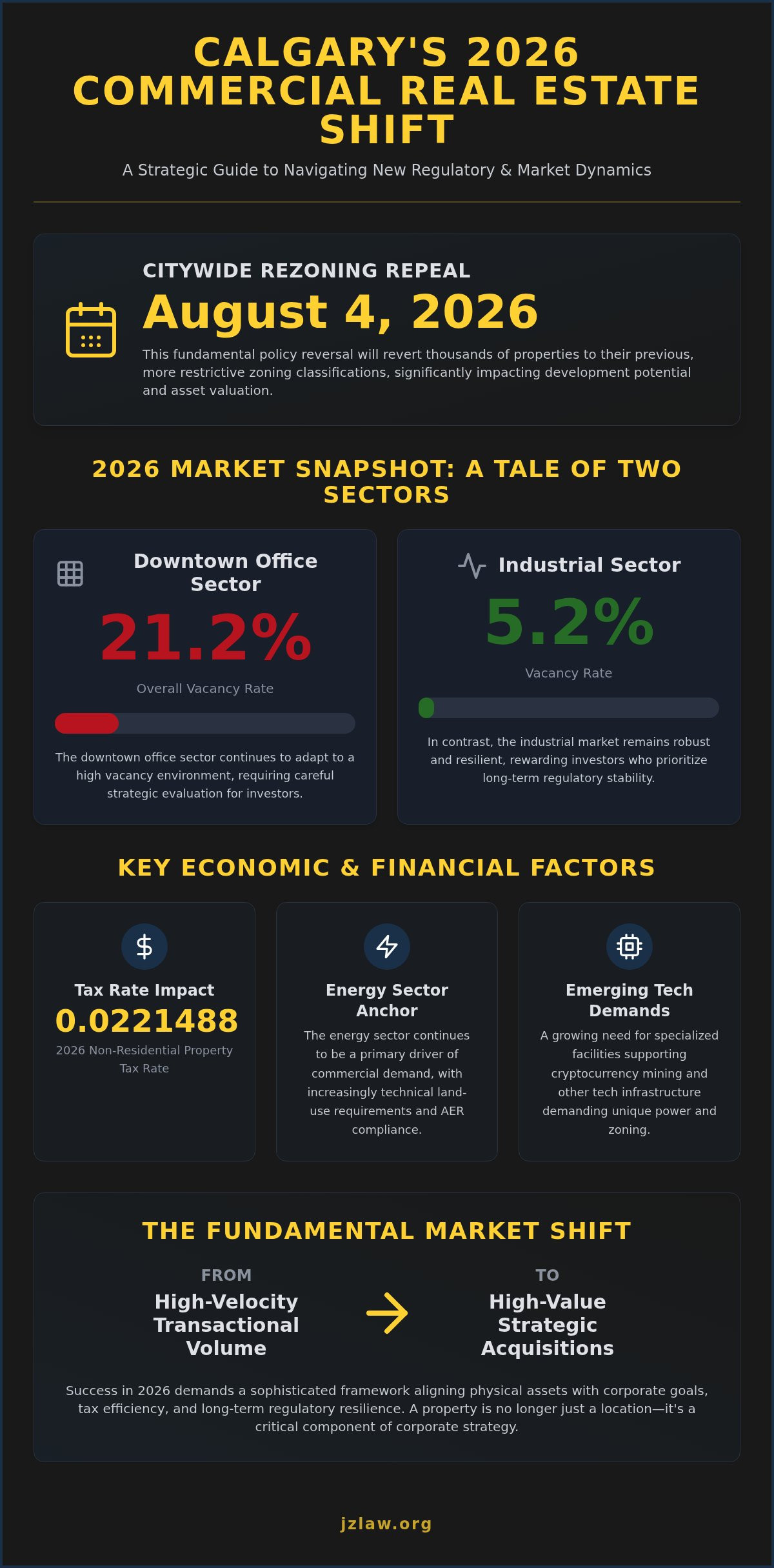
On August 4, 2026, the official repeal of Calgary's citywide rezoning policy will fundamentally transform the local development landscape, reverting thousands of parcels to more restrictive classifications. This shift proves that in the current market, a property is no longer just a physical asset; it's a volatile regulatory variable that can either anchor or destabilize your entire corporate strategy. You're likely concerned about how these municipal reversals, combined with the 2026 non-residential property tax rate of 0.0221488, will impact your bottom line and future exit potential.
Securing a commercial real estate lawyer calgary who understands the complex intersection of property law, tax structuring, and niche sectors like cannabis or cryptocurrency is essential for protecting your interests. This article provides a roadmap for navigating these legal intricacies with a strategic approach that aligns your real estate holdings with your broader corporate goals. We'll examine how to mitigate long-term risks through sophisticated holding structures and ensure your next acquisition or lease remains resilient against Calgary's shifting municipal bylaws and the current 5.2 percent industrial vacancy environment.
Table of Contents
The 2026 Calgary Commercial Real Estate Landscape
Commercial real estate law in Alberta serves as a sophisticated strategic framework that transcends the mere transfer of title. It's a discipline focused on the meticulous alignment of physical assets with the overarching corporate and regulatory objectives of a business. In 2026, the Calgary market has shifted away from the high-velocity transactional volume of previous years toward a model defined by high-value strategic acquisitions. This evolution requires a commercial real estate lawyer calgary who views a property not just as a location, but as a critical component of a company's tax and liability structure. Understanding the foundational principles of Canadian property law is only the starting point; the modern landscape demands an expert who can navigate the intersection of municipal bylaws and corporate scalability.
Current dynamics in Calgary reveal a selective market. While the downtown office sector continues to adapt to a 21.2 percent overall vacancy rate, the industrial sector remains robust with a 5.2 percent vacancy rate recorded in early 2026. This disparity creates a landscape where "standard" legal services often fall short. A routine conveyancing approach cannot address the complexities of high-stakes business models, such as those requiring specialized industrial zoning or integrated tech infrastructure. When a transaction involves millions of dollars in capital, the legal counsel provided must be proactive, identifying potential regulatory bottlenecks before they jeopardize the closing or future exit strategy.
Calgary Municipal Policy and Zoning Shifts
The most significant regulatory shift in 2026 is the repeal of the citywide rezoning policy, which officially takes effect on August 4, 2026. This reversal means that most properties will revert to their previous, more restrictive zoning classifications. For developers and investors, this creates an immediate need for precise Land Use Bylaw (LUB) verification to avoid purchasing assets with suddenly diminished development potential. Efficiently navigating Development Permits (DP) and Building Permits (BP) now requires a deep understanding of these municipal reversals. Urban densification still influences valuations, but the return to traditional zoning necessitates a more rigorous approach to due diligence to ensure that a property's intended use remains legally viable under the new municipal stance.
Economic Drivers in the Alberta Market
The energy sector continues to anchor commercial demand, yet the requirements for land use have become increasingly technical. We see a growing need for facilities that support emerging technologies, including cryptocurrency mining operations that demand specific power grid access and specialized cooling infrastructure. These niche sectors require legal counsel that understands both traditional energy regulations and the unique requirements of digital asset firms. The 2026 Calgary commercial outlook is defined by a disciplined pivot toward economic diversification, where resilient industrial assets and specialized tech spaces provide a hedge against traditional market volatility. This environment rewards the strategic investor who prioritizes long-term regulatory stability over short-term speculative gains.
Regulatory Intersections: Zoning, Energy, and Industry-Specific Compliance
High-stakes sectors in Calgary demand more than a simple title transfer. A commercial real estate lawyer calgary must act as a regulatory gatekeeper, particularly when dealing with the Alberta Energy Regulator (AER) or the Alberta Gaming, Liquor and Cannabis Commission (AGLC). Properties formerly used for industrial purposes, particularly in the oil and gas sector, carry latent environmental liabilities that can bankrupt an unwary purchaser. The AER's current liability management frameworks directly impact how land-use approvals and transfers are processed. This isn't just about environmental cleanliness; it's about the financial security required to manage potential reclamation obligations on or adjacent to commercial parcels. Every industrial acquisition requires a specialized assessment to ensure that historical land use doesn't become a future financial anchor.
The complexity of these transactions increases when property use intersects with innovative or emerging economic sectors. For instance, cryptocurrency mining facilities require unique power distribution agreements and specific zoning for high-density data processing. These aren't standard retail or industrial uses. They require a lawyer who can translate technological requirements into municipal compliance. Failing to align the physical property with its specific regulatory requirements can lead to costly delays or the total revocation of operating permits. A detailed regulatory audit before any commitment is made ensures that your business model remains viable within the constraints of Alberta's stringent oversight bodies.
Cannabis and Liquor Licensing Real Estate Needs
Calgary’s municipal bylaws impose strict "buffer zones," often requiring 150 to 300 meters of separation from schools, parks, or other restricted sites. Securing a location that meets these spatial requirements is only the first hurdle. Your lease must be structured with specific contingencies that allow for termination or modification if cannabis licensing is denied by the AGLC. Tenant improvements in this sector are capital-intensive and must adhere to rigorous safety and security standards. We ensure that your lease agreements account for these unique technical specifications, protecting your investment before the first hammer is swung. These precautions are essential for preventing a scenario where you're bound to a long-term lease for a space you cannot legally operate.
Energy and Infrastructure Land Use
The distinction between surface rights and mineral rights is a cornerstone of Alberta property law that frequently complicates commercial transactions. A commercial real estate lawyer calgary provides the necessary strategic counsel for oil and gas law within property deals, particularly when managing existing easements or right-of-way agreements. These encumbrances can limit building footprints or restrict future expansion. Proactive management of utility infrastructure agreements ensures that your property remains scalable. We analyze the historical chain of title to identify any dormant surface rights that could interfere with your development plans, providing a level of certainty that standard title insurance cannot offer.
Strategic Transaction Structuring: Acquisitions, M&A, and Tax Considerations
Choosing the optimal transaction structure is a pivotal decision that dictates your long-term tax liability and exposure to historical risks. A sophisticated commercial real estate lawyer calgary evaluates whether an asset purchase or a share purchase best serves your corporate trajectory. In an asset deal, you acquire specific property rights while leaving behind the seller's corporate liabilities; this structure often allows for a beneficial "step-up" in the cost base for depreciation purposes. Conversely, a share purchase involves acquiring the entire legal entity that owns the property. While this path is more complex due to the assumption of all corporate history, it can be essential for preserving grandfathered zoning rights or non-transferable commercial leases that are critical to the business's operations.
Integrating these assets into broader strategic corporate transactions requires a synchronized approach between property law and securities regulation. We analyze leasehold interests not merely as monthly expenses, but as intangible assets that contribute to the company's valuation during an acquisition or IPO. For companies scaling toward a public offering, the clarity of property title and the stability of long-term leases are fundamental to investor confidence and regulatory approval. Financing these deals in 2026 also requires more than traditional bank loans. We structure sophisticated capital stacks involving mezzanine debt and equity participation to ensure your liquidity remains intact while you expand your portfolio.
Real Estate in Corporate Mergers and Acquisitions
During corporate buyouts, the real estate portfolio often represents the most significant physical risk. We conduct exhaustive due diligence to identify potential successor liabilities that could attach to the commercial title. This includes reviewing historical environmental assessments and ensuring that all municipal encumbrances are disclosed. By treating real estate as a core component of the M&A process, we protect the buyer from "hidden" costs like unrecorded liens or building code violations that only surface after the corporate shares have been transferred.
Tax-Efficient Property Ownership
The legal framework for real estate law must always align with your tax strategy. Utilizing a Holding Company (Holdco) to own the property while an Operating Company (Opco) manages the business is a standard yet effective method for creditor protection and tax deferral. We also implement Capital Cost Allowance (CCA) strategies specifically tailored for Calgary commercial buildings, maximizing your annual deductions. This proaktive approach ensures that your property holdings support future scalability or a tax-efficient exit, rather than creating a fiscal burden that hinders your growth. A commercial real estate lawyer calgary who understands these nuances transforms a simple property into a powerful financial instrument.
The Commercial Due Diligence Checklist: Protecting Your Calgary Investment
Due diligence in the 2026 Calgary market serves as your primary defense against unforeseen capital erosion. A commercial real estate lawyer calgary doesn't merely check boxes; they perform a forensic analysis of the property's legal and physical standing to ensure the asset aligns with your corporate risk profile. This process is particularly critical given the August 4, 2026, repeal of citywide rezoning, which has introduced new layers of uncertainty regarding land-use permissions. Your investigative phase should follow a structured sequence to capture all potential liabilities before the rescission period expires.
Step 1: Title Search and Encumbrance Review. We examine the certificate of title for caveats, mortgages, and utility rights-of-way that could restrict your development plans.
Step 2: Zoning and Land Use Bylaw (LUB) Compliance. Verification that the property's current and intended use remains valid following the 2026 municipal policy reversals.
Step 3: Environmental Site Assessment (ESA). Most Canadian lenders require a Phase I ESA to identify "recognized environmental conditions" before approving commercial financing.
Step 4: Lease Audit and Estoppel Certificates. For income-producing assets, we verify the terms, arrears, and security deposits of every tenant to confirm the property's cash flow.
Step 5: Corporate Authority Verification. We confirm that the vendor has the legal capacity and proper board authorizations to execute the transaction.
Title and Encumbrance Analysis
Identifying restrictive covenants is essential, as these private agreements can prohibit specific business activities, such as cannabis retail or industrial processing, even if municipal zoning allows them. We review all registrations at the Alberta Land Titles Office to ensure there are no priority issues with existing liens. It's also vital to confirm that the 2026 non-residential property tax, currently set at a total rate of 0.0221488, is fully paid. Any outstanding municipal tax liens will attach to the property and must be cleared at closing to protect your equity. You can schedule a comprehensive due diligence audit to identify these hidden risks before they impact your closing costs.
Environmental and Technical Inspections
In Calgary’s industrial hubs, historical contamination remains a significant concern for both buyers and lenders. A Phase I ESA is mandatory for most financing, but if "areas of potential environmental concern" are identified, a Phase II ESA involving soil and groundwater sampling becomes necessary. We also recommend a Building Condition Assessment (BCA) to forecast long-term capital expenditures (CAPEX). Understanding the remaining lifespan of HVAC systems and structural components allows you to negotiate price adjustments or holdbacks, ensuring that your 2026 acquisition doesn't face immediate, unbudgeted repair costs.
Why Specialized Legal Counsel is the Key to Scalable Real Estate Portfolios
Scaling a commercial portfolio in Alberta requires a departure from traditional, siloed legal thinking. A commercial real estate lawyer calgary acts as a strategic architect who ensures that every acquisition supports your eventual exit or expansion. At JZ Law, we move beyond simple conveyancing to provide high-stakes solutions that integrate property assets into your broader corporate identity. This is particularly vital for organizations eyeing public markets, where real estate holdings are viewed as fundamental pillars of value. By treating property law as a component of your business's growth engine, you transform static assets into dynamic tools for capital generation.
Our approach connects physical property management with the rigors of securities regulation and IPO readiness. If your long-term goal involves a public offering or a major merger, your real estate documents must be bulletproof from day one. We identify and resolve potential title defects or lease irregularities years before they can derail a corporate transaction. This proaktive risk management prevents litigation and ensures that your property portfolio remains an attractive asset to institutional investors and regulatory bodies. We provide the stability needed to navigate the complexities of high-value transactions with absolute confidence.
Future-Proofing Your Commercial Assets
Commercial leases drafted today must anticipate the technological and corporate shifts of tomorrow. We specialize in creating flexible agreements that allow for corporate restructuring without triggering punitive "change of control" clauses. For clients operating in emerging sectors, we provide guidance on cryptocurrency law integration, ensuring that leasehold improvements for high-density data centers are legally protected and power-redundancy agreements are secured. John Zang’s unique expertise bridges the gap between complex legal statutes and the pragmatic demands of high-growth business strategy. This foresight allows our clients to pivot their operations without the friction of outdated legal frameworks.
Consulting with JZ Law
Initiating a strategic review of your current property holdings is the first step toward building a more resilient portfolio. We help you identify the right legal structure for your next Calgary acquisition, whether you're consolidating industrial hubs or expanding into niche retail spaces. A commercial real estate lawyer calgary from our firm will analyze your current titles and corporate structures to find opportunities for tax optimization and risk reduction. Our goal is to provide a level of representation that reflects the traditional prestige of the legal profession while embracing the dynamic pace of the 2026 economy. Contact JZ Law to discuss your commercial real estate strategy and ensure your assets are positioned for maximum scalability and long-term security.
Securing Your Corporate Future in Calgary's Evolving Market
Navigating the 2026 real estate landscape requires a fundamental shift from viewing property as a static location to treating it as a dynamic regulatory asset. The impending August 4 repeal of citywide rezoning and the nuances of the 2026 non-residential tax rate demand a level of precision that standard conveyancing cannot provide. By integrating rigorous due diligence with sophisticated tax structuring and industry-specific compliance, you protect your capital against the volatility of shifting municipal bylaws and emerging economic sectors. Success in this environment is reserved for those who prioritize long-term stability and regulatory foresight over simple transactional speed.
Retaining a commercial real estate lawyer calgary who understands the intricate links between property law and securities regulation ensures your portfolio remains scalable and attractive to future investors. John Zang’s business-centric approach provides the strategic counsel necessary to handle high-stakes transactions in sectors ranging from energy to cryptocurrency. We invite you to Schedule a Strategic Real Estate Consultation with JZ Law to review your current holdings or structure your next major acquisition. Taking a proaktive stance today creates the legal foundation your business needs to thrive in Alberta's most complex market to date.
Frequently Asked Questions
What is the role of a commercial real estate lawyer in Calgary in 2026?
A commercial real estate lawyer calgary in 2026 serves as a strategic advisor who manages the intersection of property rights, municipal bylaws, and corporate tax objectives. Beyond simple title transfers, they navigate the complexities of the August 4 zoning repeal and ensure that property acquisitions align with broader business goals. This role involves performing forensic due diligence to mitigate regulatory risks and structuring transactions to support future scalability or a tax-efficient corporate exit.
How much are commercial real estate legal fees in Alberta?
Legal fees for commercial transactions in Alberta are typically determined by the complexity of the deal rather than a fixed residential rate. Factors influencing the final cost include the depth of environmental due diligence required, the intricacy of corporate tax structuring, and the negotiation of industry-specific lease terms. While fees vary based on the scope of work, investing in specialized counsel prevents costly regulatory errors and long-term liabilities that far outweigh initial legal expenditures.
What is the difference between a residential and commercial real estate lawyer?
Residential lawyers handle high-volume, standardized transactions, whereas a commercial real estate lawyer calgary focuses on high-stakes, strategic business assets. Commercial practice requires deep expertise in corporate law, environmental liability, and complex municipal zoning like the Calgary Land Use Bylaw. While residential deals are often about simple ownership, commercial transactions are about risk management, tax optimization, and ensuring the property supports a specific business model or industrial operation. For those seeking expertise in the UK market, you can learn more about Triangle Legal Services Limited regarding their residential and commercial conveyancing consultancy.
Do I need a new environmental assessment when buying an industrial property in Calgary?
Most Canadian lenders mandate a current Phase I Environmental Site Assessment (ESA) for industrial acquisitions to identify potential contamination risks before approving financing. If a property is located in an established industrial hub, a Phase II ESA involving soil sampling might be necessary to quantify historical liabilities. Relying on an outdated assessment is risky, as regulatory standards and the property's physical condition can change significantly over time, impacting your future liability.
How do Calgary zoning laws affect cannabis or liquor retail businesses?
Calgary's Land Use Bylaw imposes strict spatial requirements, including buffer zones of 150 to 300 meters from schools or restricted sites, which directly limit where these businesses can operate. The August 4, 2026, repeal of citywide rezoning further complicates site selection, as many parcels will revert to more restrictive classifications. Legal counsel ensures that your lease includes specific contingencies to protect your capital if municipal permits or AGLC licenses are denied.
What are the common pitfalls in Calgary commercial lease negotiations?
Common pitfalls include failing to account for the 2026 non-residential property tax rate of 0.0221488 and signing leases with rigid "change of control" clauses that hinder future corporate restructuring. Many tenants also overlook long-term CAPEX obligations for HVAC and structural repairs. A strategic review of your lease prevents scenarios where the business is anchored to an inflexible agreement that doesn't support technological integration or future equity participation.
Can a commercial real estate lawyer help with tax structuring for my property?
Specialized legal counsel is essential for implementing tax-efficient ownership models, such as Holding Company (Holdco) and Operating Company (Opco) structures. We analyze the fiscal benefits of asset versus share purchases and develop Capital Cost Allowance (CCA) strategies tailored to the Calgary market. This approach ensures that your real estate assets are integrated into your broader corporate tax puzzle, maximizing capital gains exemptions and protecting your equity from unnecessary exposure.
How long does a typical commercial real estate closing take in Alberta?
A typical commercial closing in Alberta takes between 30 and 90 days, largely dictated by the timeline for environmental assessments and specialized financing approvals. Complex deals involving the Alberta Energy Regulator (AER) or multi-party corporate mergers may require additional time for thorough due diligence. Starting the legal review process early allows for the systematic resolution of title encumbrances or zoning issues, ensuring a predictable and secure closing for all parties.


Comments