


Cannabis Microbusiness License Lawyer NYC: Securing Your 2026 License
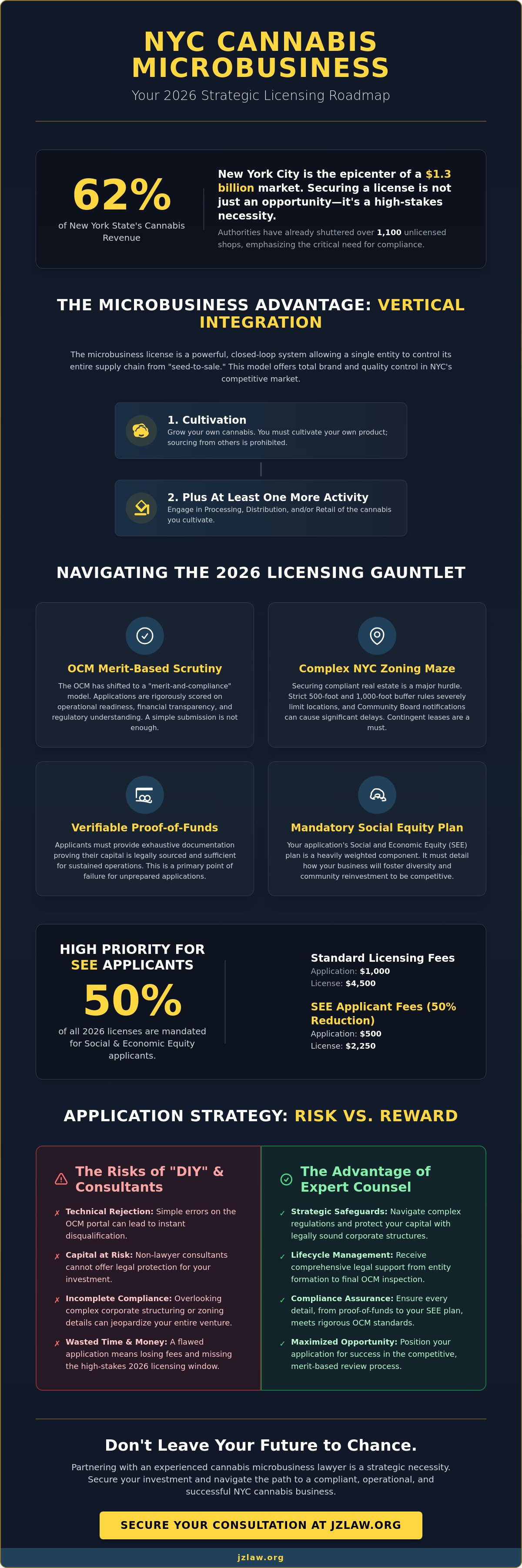
With New York City generating approximately 62% of the state's $1.3 billion in cannabis revenue through 2025, the pressure to secure a compliant foothold in this market is immense. You're likely feeling the weight of the OCM's rigorous bureaucracy and the fear that a single administrative error could jeopardize your capital and your future in the industry. It's understandable to feel overwhelmed by the complexities of vertical integration and the strict seed-to-sale tracking requirements mandated by the state. Partnering with an experienced cannabis microbusiness license lawyer NYC isn't just a luxury; it's a strategic necessity for entrepreneurs who want to avoid the fate of the 1,100 unlicensed shops already shuttered by authorities.
This professional guide outlines how to navigate the current regulatory environment and prepare your business for the next application cycle with strategic precision. You'll learn how to structure a legally sound, vertically integrated entity that prioritizes long-term protection and compliance. We'll explore the essential steps to move from an ambitious concept to a fully operational microbusiness that meets every rigorous OCM and CCB standard, ensuring your investment is shielded from avoidable risks.
Key Takeaways
Discover why the vertical integration model under a microbusiness license offers the most robust strategic advantage for NYC entrepreneurs in 2026.
Learn how a specialized cannabis microbusiness license lawyer NYC navigates the complex OCM portal and proof-of-funds requirements to safeguard your application against technical rejection.
Understand the critical legal distinctions between professional counsel and non-lawyer consultants to ensure your capital remains protected throughout the licensing process.
Identify the specific expertise required in both regulatory compliance and complex corporate transactions to secure a sustainable, compliant business structure.
Explore a comprehensive legal approach that manages the entire lifecycle of your venture, from initial entity formation to the final OCM inspection.
Table of Contents
The 2026 NYC Cannabis Microbusiness Landscape
The New York Office of Cannabis Management (OCM) has transitioned from its initial rollout phase into a period of rigorous, merit-based scrutiny. Understanding the history of cannabis legalization in New York reveals a clear trajectory toward a professionalized market where compliance is the primary barrier to entry. For the 2026 cycle, the microbusiness license remains the most versatile instrument in the Marijuana Regulation and Taxation Act (MRTA). It allows a single entity to cultivate, process, distribute, and retail its own cannabis products. This model creates a "seed-to-sale" ecosystem that grants entrepreneurs total control over their brand and quality standards, which is a significant advantage in the competitive NYC market.
The shift from a "first-come" system to a "merit-and-compliance" model means that simply submitting an application is no longer sufficient. The OCM now prioritizes applicants who demonstrate operational readiness and a deep understanding of the regulatory framework. Engaging a cannabis microbusiness license lawyer NYC is essential for navigating these expectations, especially as the state intensifies its focus on Social and Economic Equity (SEE) goals. With a mandate to award 50% of licenses to SEE applicants, 2026 represents a final, high-stakes window for eligible entrepreneurs to secure their position before the market reaches full density.
Understanding Vertical Integration Limits
The microbusiness license is a closed-loop system. You must cultivate your own cannabis and engage in at least one other activity, such as processing or retail, but you're strictly prohibited from holding an interest in any other cannabis license type. This restriction prevents the consolidation of power but requires a highly efficient business model. Maximizing revenue within the OCM's "micro" ceilings involves sophisticated corporate transactions and lean operational strategies. You're effectively running four businesses in one, and each must meet specific regulatory benchmarks to maintain the integrity of the license.
NYC Zoning and Municipal Challenges
Real estate remains the most complex variable in New York City. The 1,000-foot and 500-foot buffer rules in Manhattan, Brooklyn, and Queens significantly limit available storefronts. Beyond the map, you must manage the mandatory Community Board notification process, where local opposition can stall an application for months. A proactive legal strategy involves securing compliant real estate through contingent leases that protect your capital while the OCM reviews your site. This methodical approach ensures you aren't paying rent on a property that the state or city eventually deems ineligible due to a proximity conflict.
Legal Requirements for a Microbusiness License in NYC
Securing a license starts with a meticulous submission to the OCM portal. Unlike general business permits, New York State cannabis licensing requirements demand an exhaustive disclosure of financial history, site plans, and operational intent. For the 2026 cycle, the application fee is $1,000, while the license fee is $4,500. Social and Economic Equity (SEE) applicants benefit from a 50% reduction in these costs. However, the true challenge lies in providing verifiable proof-of-funds. You must demonstrate that your capital is legally sourced and sufficient to sustain micro-scale operations without reliance on prohibited outside interests.
Your Social Equity Plan isn't just a formality; it's a weighted component of the scoring process. The OCM aims to award 50% of all licenses to SEE applicants, including individuals from communities disproportionately impacted by prohibition and service-disabled veterans. A compelling plan must detail how your business will foster diversity and community reinvestment. Additionally, NYC urban cultivation requires a sophisticated environmental impact statement. You'll need to document energy efficiency and waste management protocols that satisfy both state and city sustainability mandates.
Corporate Structuring and Ownership
Choosing between an LLC, C-Corp, or S-Corp involves complex corporate transactions that consider Section 280E tax implications. Every individual with a financial interest must be disclosed as a True Party of Interest (TPI). The OCM is highly sensitive to "undue influence," where large-scale investors might attempt to control a microbusiness through predatory management agreements. A cannabis microbusiness license lawyer NYC ensures your corporate documents protect your autonomy while meeting these strict disclosure standards.
Operational and Security Compliance
Operational success depends on robust Standard Operating Procedures (SOPs). These documents must cover everything from employee training to emergency protocols. You're legally required to use Metrc for seed-to-sale tracking. Any gaps in your inventory can lead to severe penalties. In New York City, security mandates are particularly stringent. Your facility must include 24-hour video surveillance and secure storage areas that prevent unauthorized access. These systems aren't just for protection; they're a core requirement for passing the final OCM inspection.
The Risks of "DIY" Applications vs. Professional Legal Counsel
The administrative complexity of New York's cannabis regulations creates a high barrier to entry that often catches unrepresented applicants off guard. While the $1,000 application fee might seem like the primary risk, the true cost of a rejected application is the loss of time and market position in a highly restricted licensing window. Many "DIY" applicants fail due to technical deficiencies in their site plans, environmental impact statements, or ownership disclosures. These errors often lead to immediate rejection without a chance for correction. The OCM has already shut down over 1,100 unlicensed shops statewide, demonstrating a zero-tolerance policy for non-compliance that extends to the application process itself.
The "Consultant Trap" is a recurring issue in the NYC market. Non-lawyer consultants often provide generic templates for operating procedures, but they can't offer legal advice or the protection of attorney-client privilege. When you share sensitive financial data or strategic business plans with a consultant, those communications aren't shielded from discovery or regulatory scrutiny. A cannabis microbusiness license lawyer NYC provides a secure environment to discuss your capitalization and corporate structure, ensuring that your strategic interests remain confidential. This legal shield is essential when disclosing True Parties of Interest (TPI), as any misstep in reporting ownership can lead to allegations of fraud or "undue influence" from outside investors.
Investing in professional counsel is a strategic decision that mitigates the risk of total capital loss. The cost of legal representation is minor compared to the financial damage of a permanent license denial or a regulatory fine. By ensuring that every document is precise and compliant from the first submission, you protect your business from the delays that plague unrepresented filings. A lawyer doesn't just fill out forms; they build a defensible corporate structure that can withstand the scrutiny of both the OCM and potential future partners.
Navigating OCM Deficiency Notices
The OCM frequently issues requests for information (RFIs) or deficiency notices when an application lacks specific detail. These notices have strict legal timelines, often requiring a comprehensive response within a few business days. Failure to address a deficiency with precision can lead to a permanent denial. Professional counsel manages these communications directly, ensuring that every response is legally sound and factually consistent with your original filing. This proactivity is especially critical during the provisional license phase, where compliance determines whether you'll eventually receive final authorization to operate.
Securing Your Intellectual Property
Building a brand in the cannabis sector requires a sophisticated approach to intellectual property. While federal trademark restrictions prevent standard registration for cannabis products, there are legal strategies to protect your NYC brand through ancillary services and state-level filings. You should also consider protecting your proprietary cultivation or extraction methods as trade secrets. For a deeper look at the broader regulatory environment, consult our Cannabis Licensing Guide 2026. Protecting your IP early prevents competitors from capitalizing on your innovation once you enter the retail market.
How to Choose the Right Cannabis Microbusiness Lawyer in NYC
Selecting the right cannabis microbusiness license lawyer NYC is a foundational business decision that dictates your company's trajectory well beyond the initial application phase. You shouldn't settle for "license factories" that prioritize high-volume template filings over individualized precision. A boutique approach ensures that your specific business model, capitalization structure, and social equity narrative receive the scrutiny they deserve. Look for a firm that demonstrates a deep, verified understanding of the New York Marihuana Regulation and Taxation Act (MRTA) and its evolving interpretations by the Cannabis Control Board. This expertise is what separates a successful applicant from one who remains stuck in a cycle of deficiency notices.
Effective counsel must bridge the gap between rigid regulatory compliance and high-level corporate transactions. This dual expertise allows you to structure your entity for current OCM standards while preparing for future scalability. Fee structures should be transparent and predictable. Reputable firms typically offer flat fees for the initial application process to provide cost certainty for your startup budget, transitioning to hourly rates for ongoing regulatory maintenance or specialized advisory services. This clarity prevents the financial friction that often derails early-stage cannabis ventures.
Evaluating Regulatory Depth
Does your lawyer understand the nuances of 280E tax structuring for a vertically integrated microbusiness? Internal revenue codes remain a significant hurdle for NYC operators who cultivate and retail in the same facility. You'll also need to navigate Labor Peace Agreements (LPAs), which are mandatory for businesses meeting certain employee thresholds in New York. If your long-term vision includes taking your cannabis company public, your foundational documents must be drafted with securities regulations in mind from day one. A lawyer without this foresight can inadvertently create structural flaws that are expensive to correct later.
Strategic Partnership and Scalability
A strategic partner handles more than just OCM portal entries. They should rigorously review your commercial real estate leases to ensure they contain the necessary cannabis-use clauses and "out" provisions if a license is denied. JZ Law prioritizes principal-led counsel, meaning you work directly with experienced practitioners who understand the stakes of your investment. We don't just act as a filing service; we serve as long-term advisors for business expansion and regulatory protection. You can contact our team today to discuss how we can secure your 2026 licensing goals through a tailored legal strategy.
Strategic Licensing and Compliance: The JZ Law Advantage
John Zang’s approach to the cannabis sector is built on the principle that a license is more than a mere permit; it's a sophisticated corporate asset that requires rigorous protection. By treating each application as a high-stakes corporate maneuver, we ensure that your business is not only compliant with current OCM standards but also structured for long-term viability. Our firm provides comprehensive support that spans the entire lifecycle of your venture, beginning with the initial entity formation and extending through the final OCM inspection. This methodical oversight is designed to preemptively address the regulatory friction that often leads to delays or license revocation for unrepresented operators.
A distinctive element of our strategy involves integrating securities regulation expertise into your startup's foundational documents. While many entrepreneurs focus solely on the immediate hurdles of 2026, we look toward the future maturity of the market. Proper governance and transparent financial structures established today are what allow for seamless capital raises or potential public offerings tomorrow. When you engage a cannabis microbusiness license lawyer NYC from our firm, you aren't just hiring a filing service. You're securing a strategic partner who understands how to navigate the intersection of state-level cannabis rules and federal financial scrutiny.
A Boutique Approach to NYC Cannabis
We reject the "license factory" model favored by larger firms where microbusiness clients are often delegated to junior associates. At JZ Law, you receive direct access to senior legal expertise, ensuring that the complexities of NYC’s unique social equity tiers and municipal zoning buffers are handled with the necessary professional dignity. We recognize the specific challenges faced by local entrepreneurs in Manhattan, Brooklyn, and Queens, and we provide tailored solutions that respect the integrity of your brand. Our commitment is to the success of the local industry, providing the high-level counsel usually reserved for multi-state operators to the city's emerging microbusiness leaders.
Next Steps for Your NYC Application
The path to a 2026 license requires immediate, disciplined preparation. To ensure your application stands up to OCM scrutiny, we recommend the following actions:
Assemble your initial document packet, including proof of funds and detailed ownership history, for a comprehensive legal audit.
Identify potential real estate locations to begin the proximity analysis and Community Board notification strategy.
Formalize your Social and Economic Equity (SEE) narrative with supporting documentation to maximize your scoring potential.
Schedule a strategy session to evaluate your current corporate structure and identify any "True Party of Interest" conflicts.
The window for securing a foothold in New York City’s legal market is narrowing as enforcement against unlicensed shops intensifies. Taking a proactive, legally sound approach is the only way to safeguard your capital and your future operations. Contact JZ Law today for a strategic consultation to begin the process of securing your professional standing in the 2026 cannabis landscape.
Establishing Your Professional Legacy in NYC Cannabis
The 2026 licensing cycle represents a definitive threshold for New York City entrepreneurs who seek to dominate the local market through vertical integration. Success in this merit-based environment requires more than just administrative accuracy; it demands a sophisticated corporate foundation that aligns with the OCM's evolving expectations. By prioritizing regulatory precision and robust social equity planning, you position your business to thrive in a landscape where over 1,100 unlicensed operators have already been removed. It's clear that the transition from a provisional concept to a permanent, profitable entity hinges on the quality of your strategic counsel.
Engaging a specialized cannabis microbusiness license lawyer NYC allows you to navigate these complexities with the confidence of a principal-led, boutique partnership. We focus on building your startup's DNA with a commitment to long-term compliance and strategic corporate transactions. This proactive approach eliminates the friction of deficiency notices and shields your capital from avoidable risks. Your vision for a compliant, vertically integrated business is achievable with the right legal framework in place. Secure Your NYC Cannabis Future with JZ Law and take the first step toward a resilient professional legacy today.
Frequently Asked Questions
What is the difference between a microbusiness and a retail dispensary license in NYC?
A microbusiness license is a vertically integrated permit that authorizes the holder to cultivate, process, distribute, and sell their own cannabis products within a single ecosystem. In contrast, a retail dispensary license is strictly limited to the sale of products sourced from external licensed distributors and processors. The microbusiness model grants you total control over the supply chain, whereas a retail license focuses solely on the consumer-facing side of the industry. This level of control is comparable to how premium wellness brands operate; for example, you can discover le jus to see how a focus on fresh, natural ingredients defines a successful vertically integrated beverage company.
Can a microbusiness license holder also have an interest in a cultivation license?
License holders are strictly prohibited from holding any direct or indirect interest in other cannabis licenses, including standalone cultivation permits. The microbusiness model is designed to be a self-contained operation. The OCM enforces these vertical integration limits to prevent market consolidation and ensure that microbusinesses remain focused on their own internal production and retail activities.
How much does it cost to hire a lawyer for a cannabis microbusiness application in NYC?
The cost of engaging a cannabis microbusiness license lawyer NYC varies based on the complexity of your corporate structure and the depth of the regulatory review required. Most professional firms utilize a combination of flat fees for the initial application phase and hourly rates for specialized advisory services like tax structuring or real estate negotiations. This ensures cost predictability while allowing for the precise handling of technical deficiency notices.
What are the Social and Economic Equity (SEE) requirements for 2026?
The OCM maintains a goal of awarding 50% of all licenses to SEE applicants to address the historical impact of cannabis prohibition. Eligible individuals include those from communities disproportionately impacted by past enforcement, minority-owned businesses, women-owned businesses, distressed farmers, and service-disabled veterans. These applicants benefit from a 50% reduction in application and licensing fees, making the entry barrier significantly more manageable.
How long does the OCM take to approve a microbusiness license in NYC?
Approval timelines are determined by the volume of applications and the precision of your initial submission to the OCM. While the state hasn't established a fixed processing window, unrepresented applicants often face significant delays due to deficiency notices that require multiple rounds of legal correction. A well-prepared application that meets every technical standard from day one is the most effective way to expedite the approval process.
Do I need a physical location in NYC before I apply for a license?
You must identify a physical location and demonstrate control of the property through a deed or a contingent lease before the final stages of the licensing process. Securing a compliant site is a prerequisite for passing the OCM's proximity analysis and municipal buffer requirements. It's essential to ensure your location complies with the 1,000-foot and 500-foot rules in Manhattan, Brooklyn, and Queens before committing significant capital.
What is a Labor Peace Agreement (LPA) and do I need one?
A Labor Peace Agreement is a formal contract between a business and a labor organization where the employer remains neutral during unionization efforts. In New York, an LPA is a mandatory requirement for most cannabis license types, including microbusinesses. This agreement ensures labor stability and is a critical component of the operational compliance documents you must submit to the OCM for final authorization.
Can a microbusiness process cannabis for other license holders?
A microbusiness license holder is only authorized to process cannabis that they have cultivated on their own licensed premises. They can't act as a third-party processor for other license holders, as this would exceed the vertical integration limits established by the MRTA. Your processing activities must remain focused on your own brand and product line to maintain the integrity of your license type.


Comments