


Commercial Real Estate Lawyer Calgary: Strategic Counsel for 2026 Market Complexity
Updated: Aug 22
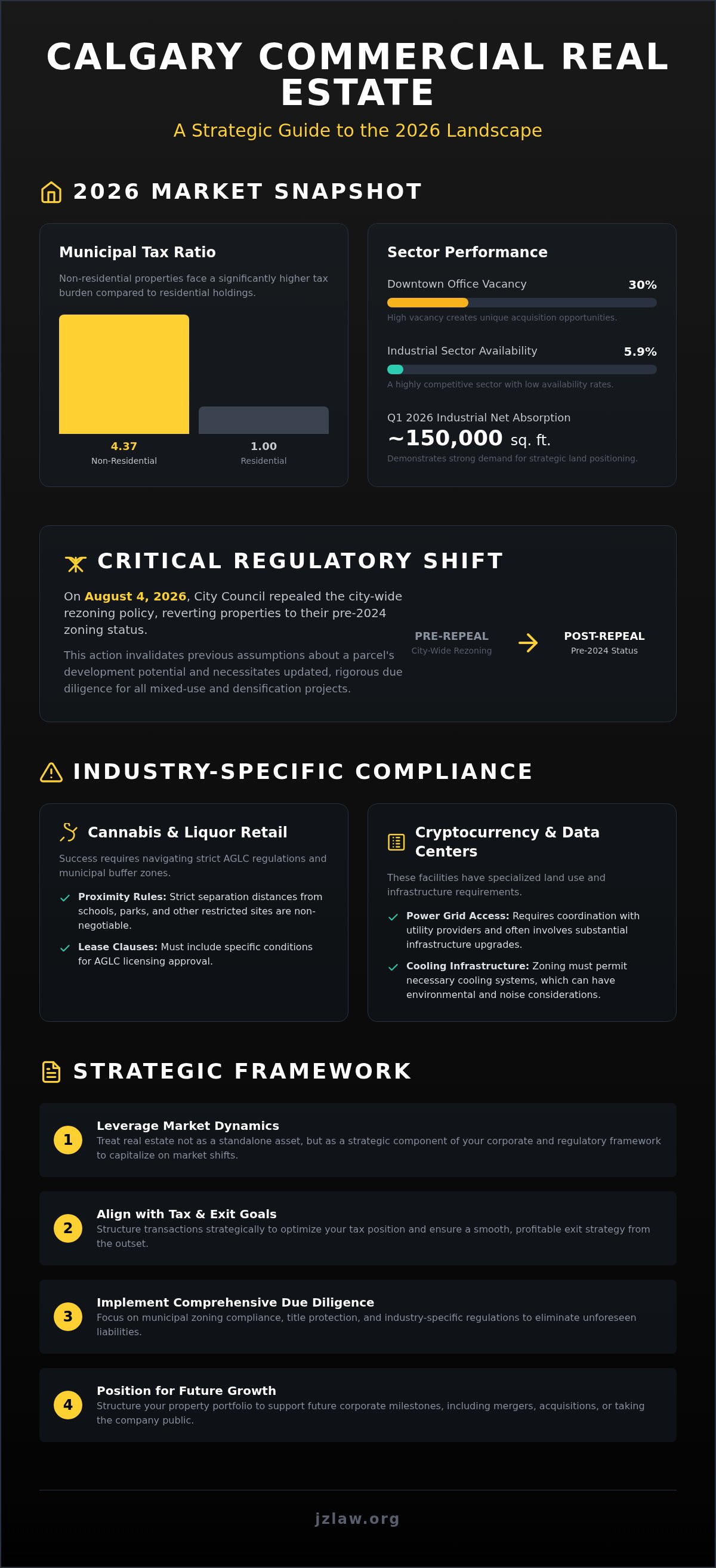
With the municipal tax ratio for non-residential properties currently set at 4.37 to one, your Calgary commercial assets represent a significantly higher financial commitment than residential holdings, necessitating a sophisticated approach to every acquisition. Success in this landscape requires more than a standard transactional mindset; it demands the strategic counsel of a commercial real estate lawyer Calgary who views property through the lens of corporate tax efficiency and long-term regulatory resilience. You likely understand that the sudden repeal of city-wide rezoning on August 4, 2026, has introduced a level of municipal complexity that makes traditional, static property strategies feel increasingly insufficient for modern business goals.
We'll provide the precise insights required to align your real estate portfolio with your broader corporate objectives and future scalability. This article explores how to navigate Calgary's unique zoning bylaws while securing property in high-stakes sectors like cannabis and cryptocurrency, ensuring your holding structures are optimized for both protection and eventual exit. We'll examine the critical interplay between the 2026 non-residential tax rates and your corporate framework, providing a roadmap to transform regulatory hurdles into secure, manageable business assets.
Table of Contents
The 2026 Calgary Commercial Real Estate Landscape
Commercial real estate law in Alberta has evolved into a sophisticated strategic business framework. In 2026, the market has transitioned away from simple transactional volume toward high-value, strategic acquisitions that demand a deeper level of legal integration. Investors and corporations no longer view property as a standalone asset. Instead, it's a critical component of a broader regulatory and tax strategy. This environment requires a commercial real estate lawyer Calgary who can navigate the foundational principles of Canadian property law while applying them to local market dynamics with surgical precision.
Standard legal services frequently fall short when they encounter modern, complex business models. Whether you're securing industrial hubs for logistics or high-tech spaces for emerging industries, the legal requirements are no longer generic. Calgary's current market is characterized by a 30% vacancy in downtown office spaces as of early 2026, alongside a highly competitive industrial sector with availability rates sitting at 5.9%. These imbalances create unique opportunities for those who can move with precision and legal certainty. Success depends on seeing the property not just as a physical site, but as a node in a complex network of municipal and provincial regulations.
Calgary Municipal Policy and Zoning Shifts
The regulatory landscape underwent a significant shift on August 4, 2026, when City Council repealed the city-wide rezoning policy. This reversal means properties have largely reverted to their pre-2024 zoning status, creating an immediate need for updated due diligence on any mixed-use or densification project. Navigating Development Permits (DP) and Building Permits (BP) now requires a proactive approach to municipal alignment. You can't assume that a parcel’s previous potential remains valid under these new amendments. These shifts directly impact commercial valuations, making it essential to verify the specific land-use bylaw updates for each district before committing capital. Precision in these early stages prevents costly delays during the construction or renovation phases.
Economic Drivers in the Alberta Market
Alberta's economic engine remains anchored by the energy sector, yet the 2026 outlook is increasingly defined by rapid diversification into tech and logistics. Cryptocurrency mining facilities and data centers have introduced specialized requirements for land use, particularly regarding power grid access and cooling infrastructure. The commercial real estate lawyer Calgary you choose must understand these niche sectors to mitigate the high-stakes risks associated with them. With industrial net absorption reaching nearly 150,000 square feet in Q1 2026, the demand for strategic land positioning has never been higher. The 2026 Calgary commercial outlook is characterized by a deliberate move toward economic resilience through diversified asset classes and sophisticated regulatory compliance.
Regulatory Intersections: Zoning, Energy, and Industry-Specific Compliance
Highly regulated industries in Alberta demand a convergence of real estate expertise and sector-specific legal knowledge. When acquiring or leasing property for niche sectors, you're not just dealing with the City of Calgary; you're often engaging with provincial bodies like the Alberta Energy Regulator (AER) or the Alberta Gaming, Liquor and Cannabis (AGLC) commission. A skilled commercial real estate lawyer Calgary ensures that land use doesn't just meet local zoning bylaws but also aligns with these broader regulatory frameworks. Industry leaders, including members of the Real Property Association of Canada (REALPAC), recognize that environmental liability and industry compliance are now central to asset valuation and risk mitigation.
Cannabis and Liquor Licensing Real Estate Needs
Securing a location for cannabis or liquor retail involves strict adherence to municipal 'buffer zones' that dictate proximity to schools, parks, and other restricted sites. In Calgary, these separation distances are non-negotiable and can render a seemingly perfect property useless for your business goals. Your lease must be structured to satisfy specific cannabis licensing protocols, including contingencies if the AGLC denies the site. Tenant improvements (TI) must also meet rigorous safety and surveillance standards before operations can commence. If you're unsure about your site's eligibility, consulting with a strategic legal partner can prevent costly mistakes during the site selection process.
Energy and Infrastructure Land Use
The intersection of property rights and resource extraction is a hallmark of the Alberta market. Distinguishing between surface rights and mineral rights is vital when dealing with rural or industrial land. Strategic counsel regarding oil and gas law is essential for properties with existing well sites or pipelines, as reclamation liabilities can transfer to new owners if not properly addressed. Managing easements and right-of-way agreements for utility infrastructure requires a meticulous review of the title to ensure your development plans don't conflict with existing statutory rights. These agreements often carry long-term implications for how a property can be utilized or expanded.
Environmental due diligence is no longer a checkbox; it's a defensive strategy against long-term liability. In properties previously used for industrial or energy purposes, a Phase I and potentially Phase II Environmental Site Assessment (ESA) is standard. These reports identify contamination that could trigger massive cleanup costs under AER guidelines. By proactively identifying these risks, you can negotiate indemnities or price adjustments that reflect the true cost of the investment. Securing an experienced commercial real estate lawyer Calgary is the first step in identifying these hidden liabilities before they impact your balance sheet.
Strategic Transaction Structuring: Acquisitions, M&A, and Tax Considerations
Navigating the decision between an asset and a share purchase requires a deep understanding of your long-term corporate trajectory. While an asset purchase provides the buyer with a clean title and a refreshed cost base for depreciation, a share purchase may offer significant tax advantages for the seller, such as access to capital gains exemptions. This choice isn't merely a clerical detail; it's a foundational decision that impacts your balance sheet for years. A commercial real estate lawyer Calgary acts as a strategic architect in these scenarios, ensuring that the legal structure of the deal aligns with your specific financial goals. Beyond the purchase method, modern financing now frequently involves multi-layered structures including mezzanine debt, private lending, and equity participation, all of which require precise legal drafting to protect your interests and define clear repayment priorities.
Real Estate in Corporate Mergers and Acquisitions
During corporate buyouts, real estate portfolios often represent the most complex portion of the due diligence process. We don't just look at titles; we assess leasehold interests as vital intangible assets that can significantly influence the valuation of the target company. Integrating property assets into strategic corporate transactions involves mitigating successor liability for environmental or municipal issues that might be attached to the commercial title. We scrutinize triple-net leases and renewal options to ensure that the target’s real estate footprint is sustainable for the acquiring entity's five-year growth plan. This proactive approach ensures that the acquisition supports future scalability rather than becoming a liability.
Tax-Efficient Property Ownership
The separation of real estate assets into a holding company (Holdco) while the business operates through an operating company (Opco) is a standard but essential strategy for risk isolation. This structure protects your property from the operational liabilities of the business. Additionally, utilizing Capital Cost Allowance (CCA) strategies for Calgary commercial buildings allows for the deferral of taxes, improving immediate cash flow. Our approach to real estate law focuses on this intersection of property rights and tax optimization. By coordinating with your financial advisors, a commercial real estate lawyer Calgary ensures that every square foot of your portfolio is working toward your exit strategy or generational wealth transfer. This includes evaluating the tax implications of passive income within your corporate structure to avoid unintended tax brackets.
The Commercial Due Diligence Checklist: Protecting Your Calgary Investment
Due diligence in the 2026 market isn't a mere formality; it's a critical defensive strategy against hidden liabilities. A commercial real estate lawyer Calgary provides the rigorous oversight needed to verify that a property’s legal status aligns with your operational requirements. This process begins with a systematic review of five primary pillars:
Step 1: Title search and encumbrance review to identify Caveats, Mortgages, or Liens.
Step 2: Zoning and Land Use Bylaw (LUB) compliance, which is especially critical following the August 4, 2026, repeal of city-wide rezoning.
Step 3: Environmental Site Assessments (Phase I and Phase II ESA) to mitigate soil and groundwater liability.
Step 4: Review of existing leases and the acquisition of estoppel certificates to confirm tenant obligations.
Step 5: Verification of corporate authority and signing officer status for all transacting parties.
Executing these steps with precision ensures that your acquisition supports long-term scalability rather than inheriting someone else's legal or financial burden. To secure your next acquisition with a custom diligence framework, consult our team for a comprehensive review of your commercial title.
Title and Encumbrance Analysis
Identifying restrictive covenants early in the process is vital because these registrations can hinder specific business operations or development plans. We conduct a thorough review of Alberta Land Titles Office registrations to resolve priority issues before they jeopardize your financing. It's also essential to check for municipal tax liens. With the June 30, 2026, deadline for lump-sum property tax payments having passed, any outstanding balances will carry significant penalties that must be adjusted at closing. Understanding how these encumbrances impact your clear title is the only way to ensure a secure transfer of ownership.
Environmental and Technical Inspections
Phase I ESAs have become a mandatory requirement for most Calgary commercial financing in 2026. These assessments are designed to identify 'historical contamination', which is a frequent concern in Alberta's older industrial zones and former energy-service sites. If the Phase I report suggests potential risks, a Phase II ESA involving soil sampling becomes necessary to quantify the liability. Beyond environmental concerns, building condition assessments (BCA) are indispensable for long-term CAPEX planning. These technical reports allow you to forecast major repair costs for HVAC or roofing systems—expertise provided by commercial specialists like Zee Jay Mechanical—ensuring your commercial real estate lawyer Calgary can negotiate appropriate holdbacks or price reductions based on the building's actual state.
Why Specialized Legal Counsel is the Key to Scalable Real Estate Portfolios
Scalability in Calgary’s commercial market requires a departure from traditional, siloed legal thinking. A commercial real estate lawyer Calgary shouldn't just be a facilitator of signatures; they must act as a strategic partner who understands the long-term corporate implications of every clause. At JZ Law, we move beyond simple conveyancing to ensure your property assets are optimized for high-stakes maneuvers, such as securities regulation and IPO readiness. This sophisticated approach ensures that your real estate portfolio doesn't become a bottleneck when your company is ready for a major capital event or a transition to the public markets. By aligning your physical assets with your corporate governance standards, we create a foundation for seamless growth.
Proactive risk management is the cornerstone of a resilient portfolio. We focus on identifying and neutralizing potential litigation triggers before they manifest as costly court battles. This involves meticulous drafting of indemnification clauses and environmental warranties that reflect the specific realities of the 2026 Calgary market. By addressing these industry-specific challenges early, we provide the security needed to scale with confidence. Our firm’s experience in niche sectors like oil and gas and emerging tech allows us to anticipate regulatory shifts that generic firms often overlook. We don't just react to problems; we build legal frameworks that prevent them.
Future-Proofing Your Commercial Assets
Drafting flexible leases is essential for businesses that anticipate rapid growth or corporate restructuring. These documents must allow for seamless assignments or subletting to accommodate mergers and acquisitions without triggering landlord defaults. Additionally, we're already preparing property portfolios for future cryptocurrency law integration, focusing on the specialized power and infrastructure requirements of digital asset mining. John Zang's expertise bridges the gap between complex legal frameworks and practical business strategy, ensuring your assets remain adaptable to shifting economic tides. This foresight is what transforms a simple property holding into a dynamic corporate asset.
Consulting with JZ Law
Identifying the right legal structure for your next acquisition is the first step toward a scalable portfolio. Whether you're evaluating a single industrial site or a multi-property portfolio, we provide the strategic review necessary to ensure your holdings are tax-efficient and legally sound. Our team analyzes your current property documents to find hidden risks and untapped opportunities for optimization. Initiating a strategic review now can save your organization from significant regulatory hurdles in the future. To elevate your property strategy and secure your corporate future, contact JZ Law for a consultation with a commercial real estate lawyer Calgary who understands the intersection of law and business.
Securing Your Corporate Future in Calgary’s Evolving Market
Calgary’s commercial landscape in 2026 demands a departure from traditional transactions toward a model of high-value strategic acquisition. You’ve seen how the recent repeal of city-wide rezoning and the non-residential tax ratio of 4.37 to one have made the role of a commercial real estate lawyer Calgary more critical than ever. Success now hinges on your ability to integrate property assets into a broader corporate framework that accounts for tax efficiency and long-term regulatory resilience. JZ Law provides the specialized oversight required for these high-stakes sectors, ensuring your real estate decisions support goals for mergers, acquisitions, or taking your company public.
Principal John Zang’s modern, business-centric approach ensures that your capital is protected from unforeseen liabilities in niche markets like energy and emerging tech. It's time to transform your real estate holdings into resilient corporate assets that drive growth rather than creating legal bottlenecks. Schedule a Strategic Real Estate Consultation with JZ Law today to ensure your portfolio is prepared for the complexities of tomorrow. We're here to provide the clarity and security your organization deserves.
Frequently Asked Questions
What is the role of a commercial real estate lawyer in Calgary in 2026?
In 2026, the role of a commercial real estate lawyer Calgary has evolved from simple conveyancing into a strategic partnership that integrates property assets into a company's broader corporate and regulatory goals. These professionals manage the legal complexities of municipal zoning shifts, tax-efficient holding structures, and industry-specific compliance for sectors like cannabis and crypto. They ensure that every acquisition is legally sound while supporting future scalability or exit strategies.
How much are commercial real estate legal fees in Alberta?
Legal fees for commercial transactions in Alberta typically depend on the complexity and value of the property involved. While some firms offer flat-rate fees for standard condominium purchases or sales, more intricate deals involving high-value assets or complex corporate structuring are usually billed on an hourly basis. It's common for businesses to budget for disbursements and taxes in addition to the base legal fee to ensure a clear financial picture of the closing costs.
What is the difference between a residential and commercial real estate lawyer?
The primary difference lies in the level of corporate integration and regulatory complexity involved in the transaction. A commercial real estate lawyer Calgary focuses on business-specific risks like environmental liability, complex zoning bylaws, and the alignment of property with corporate tax structures. Residential lawyers primarily handle title transfers for individual homes, which don't require the same depth of industrial compliance or strategic corporate analysis that a high-stakes business deal demands.
Do I need a new environmental assessment when buying an industrial property in Calgary?
Lenders in Calgary almost always require a current Phase I Environmental Site Assessment (ESA) before approving financing for industrial properties. Even if you're a cash buyer, conducting a new assessment is essential to identify historical contamination that could lead to significant cleanup costs under Alberta Energy Regulator guidelines. Relying on an outdated report from a seller can leave your organization vulnerable to long-term liabilities that were previously undetected.
How do Calgary zoning laws affect cannabis or liquor retail businesses?
Calgary zoning laws impose strict proximity requirements and 'buffer zones' that dictate how close a cannabis or liquor retail outlet can be to schools, parks, or other restricted sites. These municipal separation distances are non-negotiable and can render a specific location ineligible for a provincial license from the AGLC. Navigating these rules requires a precise analysis of the Land Use Bylaw to ensure your lease or purchase agreement is contingent on obtaining the necessary approvals.
What are the common pitfalls in Calgary commercial lease negotiations?
Common pitfalls include failing to clearly define triple-net operating costs and neglecting to include flexible clauses that allow for corporate restructuring or assignments. Vague renewal options can also lead to disputes if the "market rate" isn't properly defined at the time of extension. Ensuring your lease accounts for these variables prevents future litigation and allows your property footprint to adapt as your business grows or enters new markets.
Can a commercial real estate lawyer help with tax structuring for my property?
A specialized lawyer can structure your property holdings to isolate operational risks and maximize tax efficiencies through the use of holding companies. This includes advising on Capital Cost Allowance (CCA) strategies and ensuring that the legal framework of your acquisition supports capital gains exemptions. By coordinating with your financial advisors, they ensure your real estate assets are positioned to support your overall corporate tax strategy and future wealth transfer plans.
How long does a typical commercial real estate closing take in Alberta?
A typical commercial real estate closing in Alberta takes between 30 and 90 days from the time the purchase agreement is signed. This timeline allows for the completion of essential due diligence, including environmental assessments, title reviews, and the verification of municipal zoning compliance. More complex deals involving share purchases or multi-property portfolios may require additional time to ensure all regulatory and corporate requirements are fully satisfied before the transfer of ownership.


Comments