


Freehold Mineral Rights in Alberta: A Strategic Legal Guide 2026
While many owners still view their land through the lens of traditional oil and gas, the 2026 regulatory shift means your subsurface assets are now a multi-resource battlefield where lithium and pore space rights dictate long-term solvency. Effectively managing freehold mineral rights alberta requires more than just signing a standard lease; it demands a sophisticated understanding of the Mineral Resource Development Act and the new 120-day fast-track approval timelines. You're likely feeling the pressure of opaque lease terms and the looming April 25th deadline for Freehold Mineral Tax payments, particularly as energy companies push for increasingly complex agreements that favor their bottom line over your property's potential.
This guide provides the expert legal clarity needed to secure superior royalty rates and ensure your holdings remain tax-efficient as older wells transition to the Modernized Royalty Framework by December 31, 2026. We'll examine the critical intersection of lithium extraction, AER compliance, and the strategic preservation of your mineral wealth to ensure you're positioned as a partner rather than just a passive participant. By the end of this analysis, you'll have the framework to navigate these emerging regulations with the precision your portfolio requires.
Key Takeaways
Master the strategic components of modern mineral leases to secure favorable royalty structures and limit the impact of post-production deductions.
Identify the legal implications of the Mineral Resource Development Act on your freehold mineral rights alberta, particularly as regulations evolve for lithium and carbon sequestration.
Implement proactive tax structuring to ensure long-term efficiency and mitigate risks associated with the annual Freehold Mineral Tax cycle.
Streamline regulatory interactions by understanding the Alberta Energy Regulator’s new 120-day approval framework for critical mineral projects.
Table of Contents
Understanding Freehold Mineral Rights in Alberta
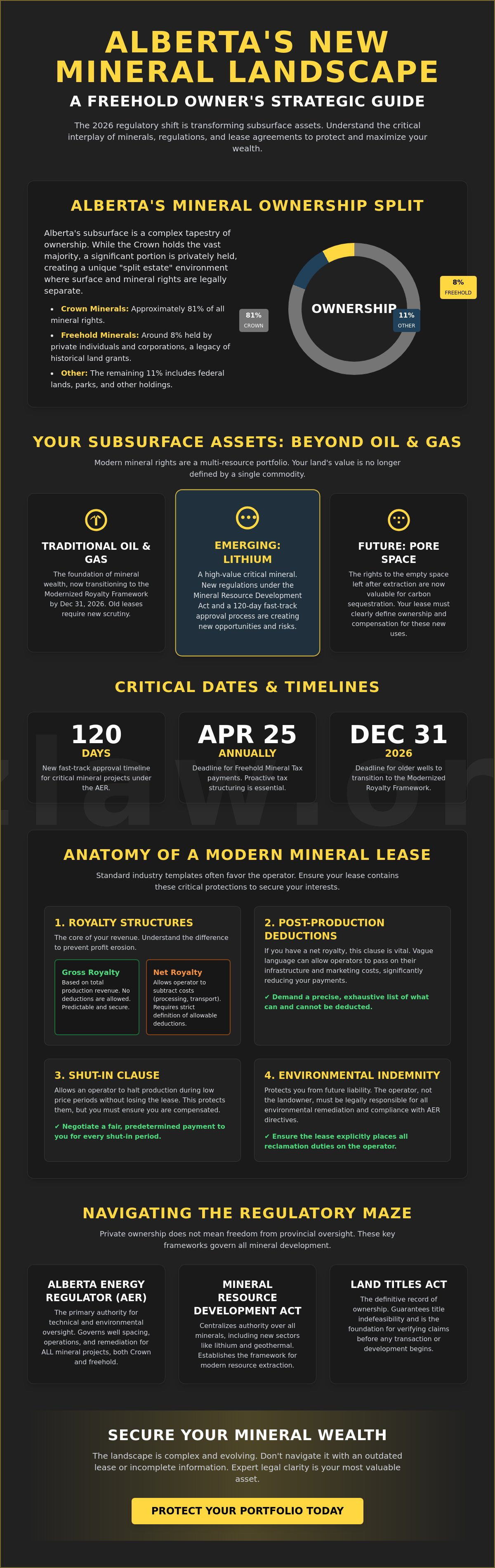
The legal architecture of Alberta's energy sector rests upon a fundamental division of ownership that dictates every commercial interaction beneath the surface. While the provincial Crown holds approximately 81% of the province's resources, the remaining 19% consists of federal holdings and private interests. Specifically, approximately 8% is held as freehold mineral rights alberta, representing a legacy of early settlement patterns, railway grants, and historical land transfers from the Hudson’s Bay Company. Understanding these origins isn't merely an academic exercise; it's the first step in verifying the legitimacy of a claim before any capital is deployed.
The Land Titles Act serves as the definitive record for these interests, providing a system of registration that guarantees the indefeasibility of title. Unlike many other jurisdictions, Alberta allows for the complete legal separation of the surface from the minerals below. A foundational grasp of Understanding Mineral Rights is essential to appreciate how these interests operate independently from the soil above. This separation creates a "split estate," where the person farming the land may have no legal claim to the oil, gas, or lithium produced from the formations beneath their feet.
The Significance of Mineral Title
Title severance occurs when a landowner transfers the surface but retains the mineral rights, or vice versa. This historical layering often creates complex ownership chains that span generations. Conducting rigorous historical title searches is mandatory to ensure that no ancient reservations or caveats cloud the current interest. In modern transactions, identifying a split estate early is vital because it dictates the scope of surface access agreements and the distribution of royalty payments. Precision in title verification prevents costly litigation when production commences.
Regulatory Oversight: The Alberta Energy Regulator (AER)
Private ownership doesn't grant an exemption from provincial oversight. The AER maintains strict jurisdiction over the technical and environmental aspects of development, regardless of whether the minerals are Crown or freehold. Compliance with AER directives is a non-negotiable requirement for any operator working on private lands. These regulations govern everything from well spacing to environmental remediation, directly impacting how private mineral leases are enforced. If an operator fails to meet AER standards, the freehold owner's asset value and legal standing can be severely compromised. The AER’s role has further expanded under the Mineral Resource Development Act, which centralizes authority over all mineral resources, including emerging sectors like lithium.
Navigating Mineral Lease Agreements and Royalty Structures
The lease agreement is the primary legal instrument governing the commercialization of freehold mineral rights alberta. It transforms a dormant subsurface asset into a revenue-generating interest. While many owners rely on standardized industry templates, these often lack the specific protections necessary to mitigate long-term liability. A modern lease must address not only the financial payout but also the technical realities of 2026 extraction methods. For a foundational perspective on the regulatory framework, the government's guide on Alberta Mineral Ownership provides essential context for these private negotiations.
Royalty structures are typically bifurcated into gross or net calculations. A gross royalty is based on the total revenue from production without deductions, whereas a net royalty allows the operator to subtract specific processing and transportation costs. The difference can be substantial. Owners must strictly define allowable deductions to prevent energy companies from eroding their margins. Strategic oversight here is paramount; without precise language, you might find yourself subsidizing the operator's infrastructure through hidden fees.
Market volatility necessitates the inclusion of a robust shut-in clause. This provision allows an operator to cease production when prices are depressed without forfeiting the lease, provided they pay a predetermined fee to the owner. Additionally, environmental indemnity clauses are vital. They ensure that reclamation responsibilities remain with the operator, protecting the freehold owner from future AER enforcement actions or soil contamination liabilities. It's a critical layer of security for any long-term asset holder.
Negotiating Favourable Lease Terms
Bespoke agreements are essential in the era of multi-stage hydraulic fracturing. High-intensity completion techniques can impact the long-term integrity of the reservoir, making it crucial to include audit rights and transparency requirements. Owners should demand detailed technical reports to verify that extraction practices align with the agreed-upon development plan. Professional Oil and Gas Law counsel can help structure these terms to balance immediate production with the preservation of the asset's future value.
Common Pitfalls in Royalty Management
Underpayment of royalties often stems from unapproved deductions for line loss or marketing fees. If a royalty statement appears inconsistent, the legal process for challenging these figures involves a formal audit and, if necessary, litigation to recover lost revenue. Equally important, lease termination clauses must be ironclad. If a well stops producing for a period exceeding the shut-in limit, the lease should automatically expire, allowing the owner to seek more capable partners and maintain the liquidity of their freehold mineral rights alberta.
The New Frontier: Lithium, Pore Space, and CO2 Sequestration
The landscape for freehold mineral rights alberta has expanded beyond hydrocarbons to include critical minerals and subsurface storage capacity. As the province moves toward a diversified energy economy, owners must grapple with the legal nuances of "brine-hosted" minerals. Lithium extraction from deep saline aquifers is no longer a theoretical possibility but a regulated reality under the Mineral Resource Development Act, which came into full effect on February 28, 2024. This regulatory shift requires a proactive legal strategy to ensure historical leases don't inadvertently grant operators access to valuable lithium deposits without additional compensation.
Strategic alignment with the renewable energy transition also involves a clear understanding of the broader fiscal framework. Even as production shifts toward battery minerals, owners must remain cognizant of the Freehold Mineral Tax in Alberta, which applies to petroleum and natural gas revenues. While lithium currently operates under distinct royalty frameworks, the integration of these resources within the same geological formations creates a complex regulatory environment that demands precise oversight to prevent revenue leakage.
The convergence of these resources often leads to conflicting subsurface claims. For instance, an operator focused on oil may overlook the value of the brine they are pumping to the surface. Without specific clauses addressing these secondary resources, you risk losing out on the "white gold" rush currently transforming the Western Canadian Sedimentary Basin. Ensuring your title is protected during this transition is the only way to maintain the long-term value of your holdings.
Lithium Rights and Brine Production
The Mineral Resource Development Act centralizes authority with the Alberta Energy Regulator to streamline approvals for critical minerals. In March 2026, the introduction of fast-track mining approvals further accelerated this process, aiming for a 120-day regulatory review timeline. Freehold owners should verify whether their existing oil and gas leases extend to "all minerals" or are restricted to specific hydrocarbons. Negotiating bespoke royalty rates for lithium-enriched brines is essential, as the cost structures for Direct Lithium Extraction differ significantly from traditional pumping methods.
Pore Space Ownership and CO2 Storage
A significant legal tension exists between the Crown’s claim to pore space for carbon sequestration and the rights of mineral owners. The provincial government manages carbon storage hubs through competitive bidding, yet the injection of CO2 can potentially strand existing mineral reserves. Future-proofing your agreements requires specific language that addresses who owns the "emptiness" underground. If your land is situated within a proposed carbon hub, you must ensure sequestration activities don't interfere with your ability to extract minerals or result in uncompensated use of your subsurface holdings.
Tax Compliance and Asset Protection Strategies
The fiscal management of freehold mineral rights alberta requires a transition from passive oversight to rigorous strategic planning. Owners often underestimate the complexities of the annual Freehold Mineral Tax (FMT) cycle. For the 2026 tax year, statements are issued in March, with the final payment due by April 25th. Failing to meet these deadlines or miscalculating liabilities based on unit values can lead to significant penalties. Beyond taxes, protection against lessee insolvency is a critical concern. If an energy company enters bankruptcy, your mineral interests could become entangled in complex liquidation proceedings. Ensuring your lease includes clear termination triggers upon a company’s financial failure is the only way to safeguard the underlying asset and prevent it from being stranded in an insolvency process.
Strategic Tax Structuring
Choosing between corporate and personal ownership significantly impacts your net returns and long-term liability. Holding companies allow for the deferral of personal income tax and provide a necessary layer of protection against direct legal claims. The Freehold Mineral Tax is an annual tax calculated based on the production revenue from petroleum and natural gas wells located on freehold land. Strategic tax structuring is particularly important when receiving substantial lease bonus payments, as these are often taxed differently than recurring royalties. Managing these inflows through a dedicated corporate entity can prevent sudden shifts into higher tax brackets while providing a cleaner vehicle for multi-resource accounting.
Estate Planning for Mineral Owners
Transferring mineral titles to future generations often leads to title fragmentation, where dozens of heirs eventually own minuscule percentages of a single tract. This dilution makes future leasing nearly impossible and complicates regulatory compliance. Using a trust or a family-held corporation can centralize management and preserve the asset's commercial viability for decades. These structures ensure that the family’s wealth remains protected and that the administrative burden of FMT compliance doesn't fall on unprepared heirs. Effectively managing freehold mineral rights alberta through a trust ensures that your heirs benefit from the revenue without the legal headaches of title fragmentation. If you are looking to secure your legacy through sophisticated Tax Structuring, professional legal guidance is indispensable to avoid the pitfalls of fragmented ownership and ensure your assets remain productive for the next generation.
Strategic Legal Counsel for Alberta Mineral Assets
Managing freehold mineral rights alberta in 2026 is no longer a matter of simple administrative oversight. It requires a partner who understands the friction between traditional oil production and the rapid acceleration of critical mineral exploration. JZ Law provides the specialized focus necessary for high-stakes transactions where every clause in a lease can represent millions in long-term value or liability. Our approach moves beyond reactive problem-solving; we position our clients as strategic participants in the energy market by anticipating regulatory shifts and market volatility before they impact the bottom line.
Large, multi-service firms often lack the granular focus required for niche subsurface disputes. We integrate corporate finance principles with deep regulatory knowledge to help clients navigate the Alberta Energy Regulator’s evolving directives. This expertise is particularly vital as the province transitions older wells to the Modernized Royalty Framework by the December 31, 2026, deadline. By aligning your legal strategy with these structural changes, you ensure that your portfolio remains resilient against both shifting government policies and the economic cycles of the energy sector.
Proactive risk management is the cornerstone of our practice. We analyze the intersection of surface rights and subsurface interests to prevent the "stranding" of assets that can occur during the development of carbon sequestration hubs. Our goal is to provide a sense of security and professional dignity to mineral owners who are often pressured by the aggressive timelines of energy companies. We treat every portfolio with the precision it deserves, ensuring that your legal standing is as robust as the resources you own.
Customized Legal Solutions
Every mineral portfolio is unique and requires a tailored approach. Whether you hold rights in the Duvernay or are navigating the expansion of carbon sequestration hubs in Northwest Alberta, your strategy must be bespoke. We specialize in tailoring oil and gas law to specific asset profiles, ensuring that lease terms reflect the technical realities of modern extraction. We represent clients in complex regulatory disputes before the AER, ensuring that private mineral lease enforcement remains robust against operator overreach and that emerging energy technologies are properly integrated into existing agreements.
Contact JZ Law for a Strategic Consultation
John Zang provides direct, hands-on counsel for corporate transactions, ensuring that your interests are protected during the most critical stages of negotiation. The first step in securing your assets is a comprehensive audit of your current mineral leases to identify unapproved deductions or expired shut-in clauses. As energy-rich areas face new real estate law challenges, having a strategist who understands both the surface and subsurface is vital. Contact JZ Law today to schedule a consultation and fortify your position in the 2026 freehold mineral rights alberta market.
Fortifying Your Subsurface Asset Strategy for 2026
Managing freehold mineral rights alberta has evolved from a passive legacy interest into a high-stakes corporate transaction requiring constant vigilance. As older wells transition to the Modernized Royalty Framework by the end of 2026 and new regulations for lithium and pore space redefine subsurface value, the margin for error in lease negotiations has disappeared. Success in this environment depends on your ability to anticipate regulatory shifts and implement a tax-efficient structure that preserves wealth across generations. Relying on outdated templates or opaque industry standards leaves your portfolio vulnerable to unnecessary deductions and liability.
Securing your interests requires a partner who combines Calgary-based regulatory insights with deep expertise in Oil and Gas Law and Strategic Tax Structuring for energy assets. John Zang provides the hands-on, strategic counsel needed to audit current agreements and negotiate bespoke terms that reflect the technical complexities of modern extraction. It's time to move beyond reactive management and take a proactive stance in protecting your subsurface wealth. Consult with JZ Law on your Alberta mineral rights strategy to ensure your assets remain productive and compliant in the years ahead. Your property's potential is significant; let's ensure it's fully realized.
Frequently Asked Questions
What is the difference between Crown and freehold mineral rights in Alberta?
Crown mineral rights are held by the provincial or federal government, while freehold rights are owned by private individuals or corporations. In Alberta, the provincial Crown owns approximately 81% of the minerals, leaving a distinct 8% as private freehold mineral rights alberta. This distinction is vital because freehold owners have the autonomy to negotiate their own lease terms and royalty rates, whereas Crown minerals are subject to standardized provincial frameworks and royalties.
Do I own the lithium if I own the oil and gas rights?
Ownership of lithium depends entirely on the specific language found in your mineral title and any existing lease agreements. While traditional leases often focus strictly on petroleum and natural gas, lithium is frequently extracted from brines that may be classified differently under the Mineral Resource Development Act. You should verify if your title includes "all minerals" or if it's restricted to specific substances to ensure you don't lose value during the current critical minerals rush.
Who is responsible for paying the Freehold Mineral Tax (FMT)?
The legal responsibility for paying the Freehold Mineral Tax rests with the owner of the mineral rights rather than the surface owner. Most modern lease agreements include a clause where the energy company agrees to pay this tax on the owner’s behalf as part of their operating costs. It's essential to audit your annual statements by the April 25th deadline to ensure the operator has fulfilled this contractual obligation and that your asset remains in good standing.
Can I lose my mineral rights if I do not develop them?
You cannot lose your underlying mineral title simply through a lack of development; freehold ownership is a permanent real estate interest. However, a specific lease agreement with an energy company will typically expire if production doesn't commence within the specified primary term. Once a lease terminates due to non-production, the rights revert to you, allowing for new negotiations with different operators who may be more capable of developing the resource.
What happens to my mineral rights if the energy company goes bankrupt?
Your ownership of the minerals remains intact if a lessee goes bankrupt, as the energy company only holds a leasehold interest rather than the title itself. The primary risk involves the "stranding" of your asset during insolvency proceedings, which can prevent you from leasing to a new partner for an extended period. Including robust termination triggers in your lease is a proactive way to ensure the agreement ends automatically upon financial failure, protecting the liquidity of your freehold mineral rights alberta.
Does a surface lease automatically include mineral rights?
A surface lease does not grant ownership or rights to the minerals beneath the land. Alberta operates under a split estate system where the surface title and the mineral title are legally distinct entities. An energy company must secure a surface lease for physical access to the land and a separate mineral lease to extract resources. Even if you own both, they are managed through different legal instruments and carry distinct regulatory requirements.
How is a mineral royalty calculated in Alberta?
Mineral royalties are calculated as a percentage of the revenue generated from production, but the specific method depends on whether your lease specifies a gross or net calculation. A gross royalty is based on the total value of resources at the wellhead, while a net royalty allows the operator to subtract specific processing and transportation costs. Precision in defining these allowable deductions is the most important factor in protecting your long-term financial returns from the well.
How do I transfer freehold mineral titles in an estate?
Transferring mineral titles requires a formal registration process through the Alberta Land Titles Office, typically involving a grant of probate or a personal representative’s deed. To avoid the common pitfall of title fragmentation among multiple heirs, many owners utilize trusts or family holding companies. These structures centralize management and ensure that the administrative burden of tax compliance and lease negotiation is handled by a single entity rather than being split among dozens of descendants.


Comments