


AGLC Cannabis Compliance Audit: A Strategic Guide to Rejections and Appeals
An AGLC cannabis compliance audit isn't merely a routine administrative check; it's a high-stakes assessment of your business's structural integrity and financial transparency. For many Alberta retailers, a single discrepancy in disclosure or a misunderstanding of the June 2026 handbook updates can trigger a license rejection that threatens millions in initial capital. The reality is that the regulatory environment has matured, and the AGLC's secondary testing programs and strict oversight mean that passive compliance is no longer a viable strategy for long-term survival.
You likely understand that the pressure to maintain a flawless record is immense, especially when faced with the rigid 30-day window to appeal an adverse decision. This guide provides the precise legal framework and strategic insights you need to navigate these complexities, from managing background checks to drafting a compelling Application for Hearing. We'll examine the specific mechanisms required to overturn administrative sanctions and ensure your operations remain both profitable and fully compliant within the evolving Alberta market.
Table of Contents
Understanding the AGLC Compliance Audit and Rejection Notice
An aglc cannabis compliance audit represents far more than a routine inspection of your retail floor or security cameras. It's a forensic examination of your organization's operational and financial history, conducted by the Alberta Gaming, Liquor and Cannabis Commission (AGLC) to ensure strict adherence to the Gaming, Liquor and Cannabis Act. During this process, auditors scrutinize inventory records, point-of-sale data, and complex financial disclosures to identify any deviations from the Retail Cannabis Store Handbook. A negative finding doesn't just result in a suggestion for improvement; it carries significant legal weight.
When you receive a "Notice of Rejection" or an "Administrative Sanction," you're facing a formal legal determination that can halt your business operations or permanently bar you from the industry. These documents are often dense with technical language and references to specific sections of provincial legislation. Understanding whether a sanction is based on a minor procedural error or a substantive failure of integrity is the first step in protecting your investment. The first 72 hours following a negative audit result are critical. This is the window where you must secure all relevant documentation and begin the process of legal analysis before the pressure of statutory deadlines takes hold.
The Critical 30-Day Appeal Window
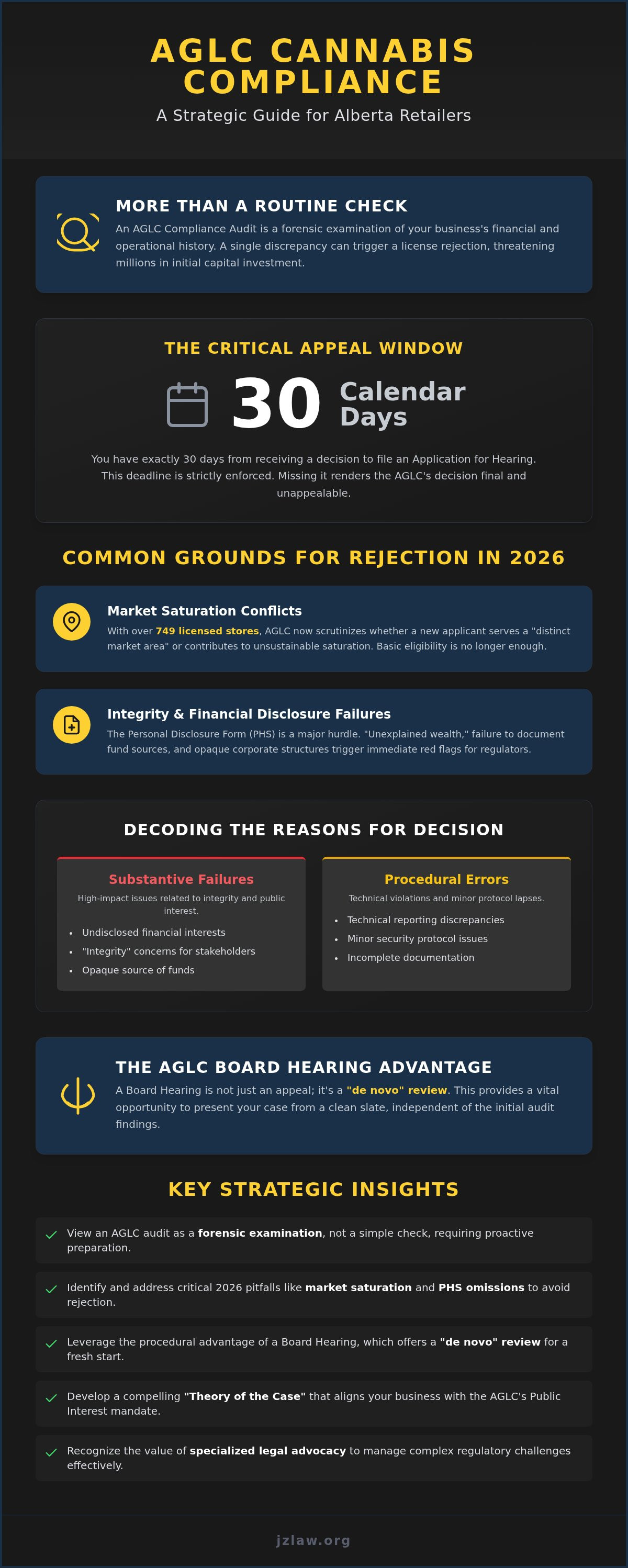
In the regulatory environment of Alberta, time is a rigid constraint. You have exactly 30 calendar days from the date you receive a decision to file an Application for Hearing with the AGLC Board. It's vital to remember that this deadline is strictly enforced; the Board rarely grants extensions unless there are exceptional, documented circumstances. Missing this window effectively renders the AGLC's decision final and unappealable. This leaves you with no legal recourse to contest the findings or the resulting sanctions. Early intervention isn't just recommended; it's a structural necessity for any viable defense strategy.
Decoding the Written Reasons for Decision
Every rejection or sanction is accompanied by written reasons that outline the Board's logic. These reasons typically categorize failures into two groups: minor procedural slips and substantive failures that impact the "Public Interest." In 2026, the AGLC has placed a heightened focus on the following:
Substantive Failures: These include undisclosed financial interests or "integrity" concerns regarding key stakeholders.
Procedural Errors: These often involve technical reporting discrepancies or minor security protocol lapses.
Discretionary vs. Factual: Determining if the decision was based on a clear violation of law or a subjective exercise of the Board's discretion.
Distinguishing between these categories allows for the development of a targeted legal response that addresses the specific concerns raised by the regulator.
Common Grounds for Cannabis License Rejections in 2026
As the Alberta market matures, the criteria for license approval have shifted from basic eligibility to a rigorous assessment of market viability and stakeholder integrity. With 749 licensed cannabis stores operating in Alberta as of June 15, 2026, the AGLC increasingly scrutinizes whether a new applicant serves a "distinct market area" or merely contributes to unsustainable saturation. This competitive landscape means that even minor inconsistencies found during an aglc cannabis compliance audit can lead to a formal Notice of Rejection. Beyond geographic concerns, the regulator focuses heavily on the transparency of corporate structures and the background of beneficial owners.
Integrity and Financial Disclosure Failures
The Personal Disclosure Form (PHS) remains one of the most significant hurdles for applicants. The AGLC requires an initial $3,000 deposit for background checks to ensure that all capital entering the legal market is legitimate and traceable. "Unexplained wealth" or a failure to document the source of funds triggers immediate regulatory red flags. Many businesses face rejection because they utilize complex tax or offshore corporate structures that, while legal in other sectors, appear opaque to cannabis regulators. If your history includes administrative sanctions in other jurisdictions, or if there's a lack of clarity regarding beneficial ownership, the Board is likely to view the application as a risk to the industry's reputation. Engaging specialized cannabis licensing counsel can help clarify these disclosures before they become the basis for a denial.
Market Demand and Community Impact Strategy
Municipal feedback plays a pivotal role in the AGLC's decision-making process. While the provincial regulator has the final word, they weigh local council resolutions and community objections heavily. In 2026, we see a rise in rejections based on "Public Interest" grounds where community sentiment is overwhelmingly negative. This isn't just about formal petitions; the AGLC monitors local media and social media sentiment to gauge potential impact. To counter these objections, applicants must provide objective data demonstrating a unique service offering or a specific consumer need that isn't met by existing retailers. Relying on general market growth is insufficient when the legal market already captures approximately 72% of total cannabis spending in the province. Proactively addressing these community concerns with a structured impact strategy is often the difference between approval and a costly administrative rejection.
The AGLC Board Hearing: Your Right to Procedural Fairness
The AGLC Board Hearing is the definitive legal mechanism for challenging a license rejection or administrative sanction. Unlike a standard meeting, this proceeding operates under strict administrative law principles designed to ensure procedural fairness. One of the most significant advantages for a business owner is that the Board conducts a "de novo" review. This means the Hearing Panel starts with a clean slate; they don't simply rubber-stamp the previous findings of the Regulatory Services division. Instead, they hear the evidence anew, allowing you to present a comprehensive case that may include information not fully captured during the initial aglc cannabis compliance audit.
However, it's vital to understand that the burden of proof rests entirely on the applicant. In a criminal trial, the state must prove its case, but in the regulatory environment of Alberta's cannabis sector, the applicant must demonstrate, on a balance of probabilities, that they meet all eligibility requirements. You must prove that granting the license or overturning the sanction is in the public interest. The Hearing Panel maintains a necessary independence from the investigators who conducted the audit, acting as an unbiased adjudicator to determine if the law has been applied correctly and fairly.
Procedural Fairness in Regulatory Appeals
Procedural fairness is the cornerstone of any administrative appeal. It encompasses your right to be heard and, crucially, your right to full disclosure. Before the hearing, you're entitled to access the AGLC's complete investigative file regarding your business. This file often contains the internal notes, emails, and specific data points used to justify the initial rejection. Reviewing this material is essential for identifying potential bias or procedural errors that occurred during the aglc cannabis compliance audit. If the regulator failed to consider relevant evidence or relied on flawed logic, the hearing is your primary opportunity to bring these failures to light.
Virtual vs. In-Person Hearings in 2026
As of 2026, the AGLC frequently utilizes video conferencing for Board Hearings, requiring participants to maintain high standards of technical readiness and professional decorum. While the format is digital, the legal weight remains unchanged. Oral testimony is often the most persuasive element of a hearing; it allows the Panel to assess the credibility of witnesses and the sincerity of the business's commitment to compliance. You must be prepared for rigorous cross-examination by AGLC legal counsel. They'll probe for inconsistencies in your testimony or your original application. Success in this environment requires disciplined preparation and a clear, evidence-based narrative that withstands intense scrutiny.
Strategic Steps to Overturning an AGLC Rejection
Overturning a license rejection requires a shift from defensive reaction to proactive legal strategy. This process begins with a forensic audit of your original application and the subsequent aglc cannabis compliance audit responses. You must identify exactly where the communication broke down or where the regulator's interpretation of the facts diverged from the evidence. This analysis forms the foundation of your "Theory of the Case," a central narrative that demonstrates why your business operations align with the AGLC's Public Interest mandate. Precision in your written submissions is paramount; the Board values structured logic and verifiable data over general assertions.
Expert witnesses often provide the technical weight needed to tip the scales in your favour. Market analysts can provide objective data to counter claims of geographic saturation, while community planners can testify to the suitability of your specific location. These professionals transform subjective community objections into quantifiable, legal arguments that the Hearing Panel can evaluate objectively. Success depends on your ability to present a case that isn't just about your business interests, but about the integrity of the Alberta cannabis market.
Gathering New Evidence and Correcting the Record
While the Board Hearing is a fresh review, there are specific rules regarding the introduction of "new" versus "supplementary" evidence. Supplementary information clarifies the existing record, such as providing a missing tax document or a clearer corporate organizational chart that was misinterpreted during the aglc cannabis compliance audit. Fixing these disclosure gaps before the hearing date is essential to demonstrate transparency. If community opposition was a primary factor in your rejection, documenting broad local support through structured surveys or endorsements can effectively outweigh generic social media sentiment.
Preparing for Panel Inquiries and Cross-Examination
The Hearing Panel will likely focus on complex areas such as corporate history, beneficial ownership, and tax structuring. You must maintain a professional, calm demeanor even under intense scrutiny; the Board is assessing your fitness to hold a license as much as the facts of the case. It's vital to present yourself as a reliable, sophisticated operator who understands the gravity of provincial regulations. Your counsel plays a vital role here, redirecting lines of questioning and clarifying witness testimony to ensure the record remains accurate and focused on the relevant legal issues. To build a robust defense and protect your capital investment, consider seeking strategic legal advocacy for AGLC appeals.
JZ Law: Expert Advocacy for Complex Regulatory Appeals
In the high-stakes cannabis sector, a regulatory challenge is rarely just about paperwork. It's a direct threat to the enterprise's foundational value and its future scalability. JZ Law, led by John Zang, provides the specialized advocacy required to bridge the gap between aggressive business growth and Alberta's rigid regulatory frameworks. Our approach transcends simple representation at a hearing. We position our clients as sophisticated, transparent, and ready for long-term operational success. This remains true whether you're maintaining a single retail location or preparing for future public offerings.
A proactive aglc cannabis compliance audit strategy is the most effective way to protect your investment. We don't just react to rejections; we build a narrative of compliance that withstands forensic scrutiny. By treating the regulatory process as a strategic business hurdle rather than an administrative burden, we help you maintain the momentum of your corporate transactions. We ensure your operations satisfy the AGLC's mandate for public interest and transparency without sacrificing your commercial interests.
Strategic Counsel for High-Stakes Licensing
John Zang's background in securities regulation and corporate finance provides a distinct advantage when addressing the AGLC's concerns about financial transparency and beneficial ownership. We align your corporate structure with provincial requirements while ensuring you remain attractive to institutional investors. This dual focus is essential for companies aiming for IPO readiness or significant capital raises. If you're seeking a comprehensive overview of the current landscape, our Cannabis Licensing Guide 2026 offers deeper insights into these evolving frameworks and global best practices.
Proactive Risk Management and Audits
The most successful appeals are often those that are avoided through preventative action. We conduct internal, pre-application audits to identify potential red flags in your financial disclosures or operational records before the regulator does. This strategy minimizes the risk of a negative aglc cannabis compliance audit result and ensures your documentation is forensic-ready from the start. For multi-jurisdictional operators, our Strategic Corporate Transactions 2026 guide provides a roadmap for structuring growth without compromising your regulatory standing in Alberta. We move beyond the hearing to help you establish sustainable operations that support your long-term business objectives.
Securing Your Operational Future in the Alberta Market
The path from a negative audit result to a successful license reinstatement requires more than mere administrative correction; it demands a sophisticated legal strategy that addresses the regulator's core concerns regarding public interest and corporate integrity. By understanding the "de novo" nature of the Board Hearing and respecting the rigid 30-day appeal window, you can transform a setback into an opportunity to solidify your market standing. An aglc cannabis compliance audit should be viewed as a definitive test of your organization's transparency and long-term viability, requiring a response that is both forensic in detail and strategic in its execution.
Navigating these complexities alone often results in missed deadlines or fragmented arguments that fail to meet the necessary burden of proof. JZ Law serves as a strategic partner, offering boutique expertise in complex regulatory sectors to help you manage high-stakes licensing challenges with precision. Whether you're correcting disclosure gaps or preparing for rigorous cross-examination, our team provides the advocacy needed to protect your capital and your reputation. Contact JZ Law for a Strategic Consultation on Your AGLC Appeal and take the first step toward securing your business's future. With the right legal framework, overturning a rejection is a manageable strategic objective.
Frequently Asked Questions
Can I reapply for an AGLC license immediately after being rejected?
You aren't restricted from reapplying, but doing so without addressing the specific grounds for the initial rejection is likely to result in a second denial. An aglc cannabis compliance audit that reveals substantive integrity issues or financial opacity must be remediated through structural changes before a new application is submitted. Most operators find that appealing the current decision is a more efficient path than starting the multi-month application process from scratch.
What is the current cost of an AGLC Board Hearing appeal in 2026?
As of June 1, 2026, the AGLC requires a non-refundable $400 application fee for each store location, alongside a $3,000 initial deposit for background checks. While there isn't a separate "appeal fee" listed for the hearing itself, the financial commitment involves the costs of gathering new evidence and securing expert testimony. These regulatory costs ensure that only serious, compliant applicants proceed to the Board level to contest a prior administrative decision.
Do I need a lawyer for an AGLC Board Hearing, or can I represent myself?
You're permitted to represent yourself at a Board Hearing, but the procedural complexity makes this a high-risk strategy for most business owners. The AGLC is represented by experienced legal counsel who will cross-examine your witnesses and probe your financial disclosures. Securing a strategic partner with boutique expertise in regulatory sectors ensures that your "Theory of the Case" is presented with the professional dignity and precision required to influence the Panel's decision.
How long does the AGLC appeal process usually take from filing to decision?
Under the current 2026 regulations, the AGLC Board is required to hold a hearing within 120 days of receiving your Application for Hearing. Following the conclusion of the proceedings, the Board typically issues a written decision within 30 to 60 days. This timeline means the entire process, from the initial rejection following an aglc cannabis compliance audit to a final Board determination, generally spans four to six months for Alberta operators.
What happens if the AGLC Board upholds the original rejection decision?
If the Board upholds the original rejection, the administrative decision becomes final within the AGLC's internal framework. At this stage, your remaining legal recourse is to apply for a Judicial Review in the Alberta Court of King's Bench. This process focuses on whether the Board made a legal error or failed to provide procedural fairness, rather than re-evaluating the business facts or the merits of the original license application submitted in Calgary or other municipalities.
Can community members or competitors testify at my AGLC hearing?
Yes, the AGLC's mandate includes protecting the public interest, which allows for the participation of affected parties. Community members, municipal representatives, and even direct competitors may be granted standing to provide testimony if they can demonstrate a legitimate interest in the outcome. Countering these objections requires a data-driven strategy that uses market analysis to prove your business provides a distinct service without creating undue geographic saturation in your specific market area.
Is it possible to reach a settlement with AGLC before the hearing date?
It's possible to engage in discussions with AGLC Regulatory Services prior to the hearing date to resolve outstanding compliance issues. In some cases, if you can demonstrate that the concerns raised during the aglc cannabis compliance audit have been fully remediated, the regulator may agree to a consent order. This avoids the time and expense of a full hearing while ensuring your business operations meet all provincial standards and Retail Cannabis Store Handbook requirements.
What is the difference between a Board Hearing and a Judicial Review?
A Board Hearing is a "de novo" merits review where the Panel looks at the facts of your case as if for the first time. In contrast, a Judicial Review is a court proceeding that examines the legality of the Board's decision-making process. The court doesn't decide if you should get a license; it only decides if the Board followed the law and acted fairly during your previous appeal within the Alberta regulatory system.


Comments