


Oil and Gas Lawyer Edmonton: Strategic Legal Counsel for Alberta’s Energy Sector in 2026
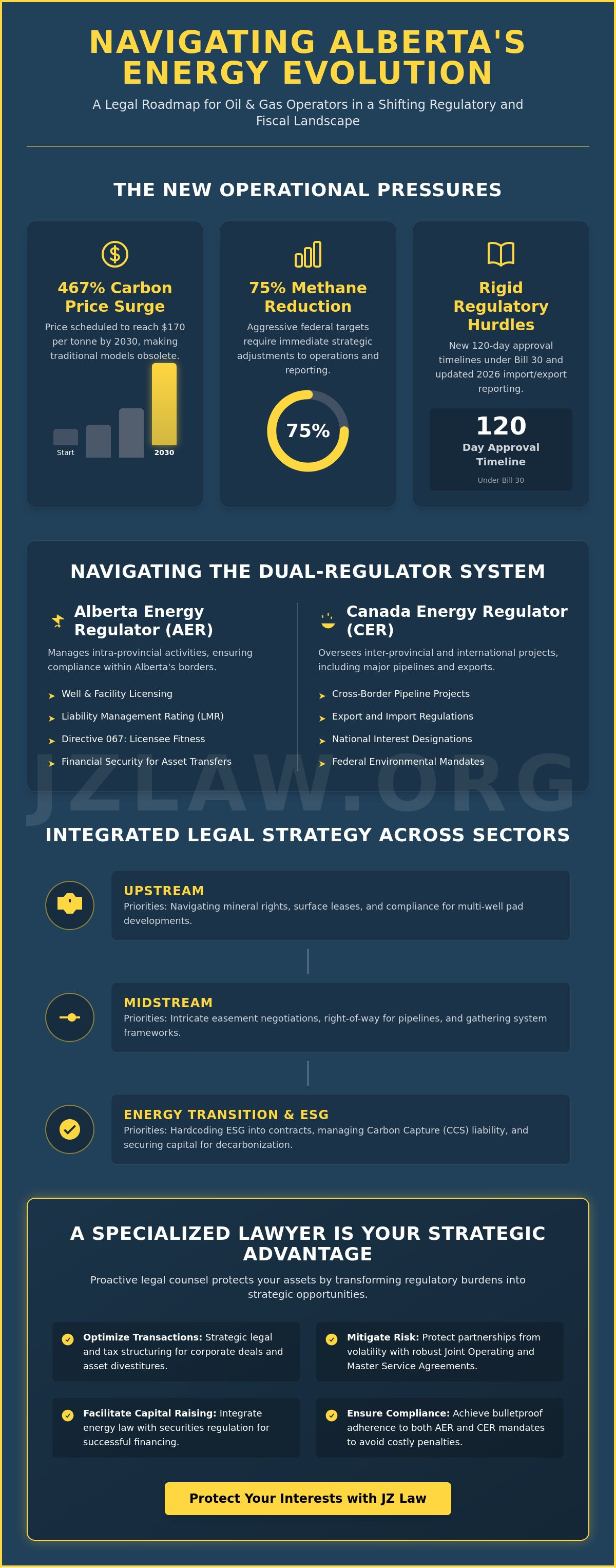
Did you know that the price of carbon in Canada is scheduled to rise by 467% over a ten-year period, reaching $170 per tonne by 2030? This aggressive fiscal trajectory, coupled with the 2026 implementation of updated export and import reporting regulations, means that traditional operational models are rapidly becoming obsolete. Securing a specialized oil and gas lawyer edmonton is now a prerequisite for managing the rigid regulatory hurdles imposed by the AER and the federal government's 75% methane emission reduction targets.
You're likely feeling the pressure of balancing immediate production goals with the long-term requirements of the Carney-Smith Agreement and the new 120-day approval timelines under Bill 30. It's clear that the intersection of environmental performance and market access is the new baseline for success in Alberta's energy sector. This article will show you how to protect your interests through precise legal strategies that address both provincial mandates and federal net-zero targets while maintaining profitability.
We'll provide a roadmap for achieving bulletproof regulatory compliance and strategic tax structuring for your energy assets in this complex environment. We'll also explore how to minimize litigation risk in operational agreements and capitalize on the strategic advantages of the West Coast Pipeline's national interest designation.
Key Takeaways
Understand the distinct roles of the AER and CER to ensure your energy projects maintain rigorous compliance with both provincial and federal mandates.
Learn how a specialized oil and gas lawyer edmonton can optimize corporate transactions and asset divestitures through strategic legal and tax structuring.
Identify critical risk mitigation techniques for Joint Operating Agreements and Master Service Agreements to protect your partnerships from operational volatility.
Discover the advantages of a multidisciplinary legal approach that integrates energy law with securities regulation to facilitate capital raising in 2026.
Explore why Edmonton’s position within the Western Canadian Sedimentary Basin makes it the essential hub for sophisticated energy service and operational strategy.
Table of Contents
The Evolving Landscape of Oil and Gas Law in Edmonton
Oil and gas law in Alberta has matured into a sophisticated, multidisciplinary field that extends far beyond simple lease negotiations. It now demands a synthesis of real property law, complex contract structures, and a deep understanding of rapidly shifting regulatory frameworks. Edmonton serves as the operational nerve center for the Petroleum industry in Canada, positioning it as a critical hub for legal strategy that spans the entire Western Canadian Sedimentary Basin. For companies operating in this space, an oil and gas lawyer edmonton provides the necessary foresight to align operational goals with provincial and federal mandates.
The industry is traditionally categorized into three sectors, each presenting unique legal challenges. Upstream operations focus on the exploration and production of raw materials. Midstream involves the transportation and storage of these resources, while downstream encompasses refining and distribution. By 2026, the legal lens through which these sectors are viewed has shifted. It's no longer enough to manage these as isolated silos. Success now requires an integrated legal and financial strategy that accounts for fluctuating commodity prices, aggressive carbon taxation, and the need for seamless asset transitions.
Upstream and Midstream Legal Priorities
In the upstream sector, navigating mineral rights and surface lease agreements requires extreme precision. Alberta's complex ownership structures mean that any ambiguity in a lease can lead to costly delays. Midstream legal priorities are equally demanding, focusing on the legal frameworks for pipeline development and gathering systems. As unconventional resource extraction becomes more prevalent, legal counsel must address:
Clarity in surface access rights and compensation structures for landowners.
Regulatory compliance for multi-well pad developments and hydraulic fracturing operations.
Intricate easement and right-of-way negotiations for inter-provincial gathering systems.
The Shift Toward Energy Transition and ESG
Environmental, social, and governance (ESG) mandates are no longer optional. They're now hardcoded into modern energy contracts. Capital providers in 2026 prioritize assets that demonstrate clear decarbonization pathways. This shift has massive legal implications for carbon capture and sequestration (CCS) projects, particularly in the Edmonton region and the Alberta Industrial Heartland. An experienced oil and gas lawyer edmonton helps firms navigate the liability structures of long-term carbon storage and the negotiation of pore space rights. In 2026, Alberta oil and gas law is defined as the strategic management of regulatory compliance, environmental stewardship, and complex corporate transactions to ensure the long-term viability of energy assets. This proactive approach ensures that ESG commitments are not just aspirational but are legally enforceable and operationally sound.
Navigating the Regulatory Framework: AER and CER Compliance
The regulatory environment in Alberta is defined by a rigorous dual-regulator system. While the Alberta Energy Regulator (AER) manages intra-provincial activities, the Canada Energy Regulator (CER) oversees projects crossing borders. Navigating these overlapping jurisdictions requires more than just technical knowledge; it demands a proactive legal posture. Administrative penalties for non-compliance have scaled significantly by 2026, making the role of an oil and gas lawyer edmonton essential for preserving operational continuity. Companies that wait for an audit to address gaps often find themselves facing costly project suspensions.
AER Compliance and Operational Licensing
Securing well and facility licenses involves a multi-stage process where financial transparency is key. Under Directive 067, the AER scrutinizes the fitness of licensees to ensure they can meet their obligations throughout the asset's life cycle. This scrutiny extends to the Liability Management Rating (LMR), which dictates the financial security required for asset transfers. Companies with poor LMR scores face prohibitive bonding requirements that can stall or terminate potential acquisitions. Engaging with a firm specializing in Oil and Gas Law helps operators audit their portfolios and improve their standing before the regulator.
Environmental Mandates and First Nations Consultation
Legal standards for the duty to consult have become increasingly stringent in 2026. Within the Treaty 6 territory surrounding Edmonton, consultation must be meaningful, documented, and proactive. This process involves addressing potential impacts on treaty rights and traditional land use long before a project breaks ground. Effective engagement strategies prevent the litigation delays that often plague major energy developments. Operators must also manage escalating reclamation obligations.
Contributions to the orphan well fund are now calculated using more aggressive risk-based models. Failing to adhere to AER environmental standards in 2026 results in immediate operational suspension and mandatory remediation orders that carry severe reputational and financial consequences. Managing these risks requires a strategic partner who understands both the letter of the law and the practicalities of field operations. By prioritizing these regulatory pillars, firms can secure their social license to operate while protecting their bottom line from avoidable administrative friction.
Strategic Corporate Transactions and Energy Finance
Capital allocation in the Alberta energy sector has undergone a fundamental shift. In 2026, raising capital requires a sophisticated demonstration of regulatory resilience and fiscal transparency. An oil and gas lawyer edmonton acts as the architect for these financial structures, ensuring every deal accounts for the federal carbon tax increase to $130 per tonne by 2040 and the strict 75% methane reduction targets. Whether you're securing private equity or navigating the oversight of the Canada Energy Regulator (CER) for midstream expansion, your legal framework must be as robust as your engineering.
Mergers, Acquisitions, and Due Diligence
Asset acquisitions and divestitures (A&D) in the current climate demand exhaustive due diligence that extends beyond traditional mineral title reviews. Successor liability is a primary concern; buyers must meticulously audit environmental remediation debts and orphan well obligations. Structuring corporate transactions to maximize tax efficiency involves balancing flow-through shares with strategic capital cost allowances. This precision prevents future litigation and ensures that acquired assets don't become an unexpected liability on the balance sheet. During the due diligence phase, we focus on:
Verifying the accuracy of Liability Management Ratings (LMR) and potential security deposit requirements.
Auditing historical indigenous consultation records to identify potential treaty rights challenges.
Assessing the impact of the Expedited 120-Day Approval Act on pending project timelines.
Evaluating the transferability of existing environmental permits and carbon credits.
Securities and Taking Energy Companies Public
For mid-market energy firms, the path to the TSX or TSXV involves more than just a ticker symbol. The process of taking companies public requires rigorous adherence to continuous disclosure requirements. Energy issuers must draft prospectuses that accurately quantify reserve risks while addressing the long-term impact of electrification on global market demand. An experienced oil and gas lawyer edmonton ensures that your securities filings are defensible and transparent, building the investor trust necessary for a successful IPO. We guide companies through the complexities of National Instrument 51-101 standards and the evolving ESG reporting mandates that institutional investors now demand. This proactive approach minimizes the risk of regulatory stay orders and facilitates smoother transitions into the public markets.
Mitigating Risk in Joint Ventures and Operational Agreements
Joint ventures remain the primary vehicle for sharing the substantial capital requirements and technical risks inherent in Alberta's energy projects. The Joint Operating Agreement (JOA) serves as the fundamental governance document for these partnerships, dictating cost-sharing structures, decision-making protocols, and dispute resolution paths. Without a precisely drafted JOA, even a geologically superior asset can become a source of protracted legal friction. An oil and gas lawyer edmonton ensures these agreements are tailored to the specific operational realities of 2026, where environmental performance and carbon intensity are now as critical as production volume.
Master Service Agreements (MSAs) represent another critical layer of risk management. These contracts with oilfield service providers must clearly define the scope of work and the allocation of liability to prevent gaps in coverage. We often see disputes arise from poorly defined indemnity clauses or insurance requirements that don't reflect the high-stakes nature of modern, high-pressure operations. Strategic use of Farm-in and Farm-out agreements also remains a staple for managing exploration risk. These allow companies to earn an interest in a lease by performing specific work, providing a flexible path for asset growth without an immediate, heavy capital outlay. To secure your partnerships against unforeseen volatility, consult with a specialist in Oil and Gas Law today.
When friction occurs, the choice between arbitration and litigation in the Edmonton courts is a strategic decision. While arbitration offers privacy and specialized expertise, litigation through the Alberta Court of King's Bench provides a public record and established precedents. We help clients weigh these options based on the complexity of the asset and the long-term relationship between the partners.
The Anatomy of a Robust Joint Operating Agreement
A robust JOA must clearly define the Operator's duties and the applicable standard of care. It's essential to include legal protections for non-operators, such as expenditure oversight and audit rights, to ensure capital is deployed efficiently. Handling 'cash calls' and defaults requires specific, enforceable mechanisms. If a partner fails to meet their financial obligations, the agreement must provide clear remedies, including the potential forfeiture of interests, to protect the viability of the project.
Risk Allocation and Indemnification
Drafting ironclad indemnity clauses is paramount, especially regarding environmental incidents and the 2026 methane emission mandates. These clauses must survive the termination of the agreement and account for the evolving regulatory landscape. Insurance requirements must be carefully calibrated to cover high-stakes operations, including blowouts and pollution events. Under standard Alberta JOAs, gross negligence is defined as a conscious and voluntary disregard of the need to use reasonable care, which is likely to cause foreseeable grave injury or harm. This threshold is notoriously difficult to meet, making the initial drafting of the Operator's standard of care even more vital for non-operating partners.
Why JZ Law is Your Strategic Partner in the Alberta Energy Sector
The energy sector requires more than a standard legal representative; it demands a partner who views legal hurdles through the lens of business growth. In an era where 2026 regulatory timelines and federal carbon pricing dictate the rhythm of operations, a specialized oil and gas lawyer edmonton serves as a vital architect for your corporate structure. JZ Law moves away from the traditional model of excessive billable hours, focusing instead on high-impact, strategic corporate solutions that align with your long-term commercial objectives. We understand that in the Alberta basin, legal compliance is only the baseline. True success lies in how you leverage those regulations to create a competitive advantage.
Our firm provides a bridge between local operational requirements and the global capital markets. Whether you're a mid-market producer or a startup exploring carbon capture initiatives, we offer a multidisciplinary perspective that combines oil and gas law with sophisticated securities and tax expertise. This integrated approach ensures that your corporate transactions are not only compliant with the AER but are also structured to attract institutional investment and minimize tax leakage across borders.
Boutique Agility vs. Big Law Complexity
Working with a boutique firm means you receive direct, principal-led counsel from John Zang. You won't find your files passed down through layers of junior associates. This model ensures that high-stakes matters receive the precision they deserve, providing a level of personalized attention that large firms often struggle to maintain. We offer cost-effective strategies specifically tailored for mid-market energy firms and startups. Our priority is strategic alignment; we don't just tell you what the law says, we show you how to use it to achieve your specific business goals.
A Comprehensive Legal Ecosystem
Modern energy projects often bleed into other legal territories. We leverage our expertise in real estate law to manage the complexities of surface rights, easements, and facility acquisitions, ensuring your land assets are secured with the same rigor as your mineral rights. Additionally, as the energy sector explores innovative revenue streams, we integrate cryptocurrency law insights for firms looking into energy-intensive mining operations to monetize stranded gas or excess power. This holistic view makes us a unique ally in the Edmonton region. To discuss how we can secure your energy assets and streamline your regulatory path, schedule a strategic consultation with JZ Law today.
Securing Your Energy Legacy in Alberta's Modern Regulatory Era
The 2026 energy landscape in Alberta rewards those who prioritize proactive risk mitigation and sophisticated corporate structuring. From navigating the AER’s stringent methane targets to executing complex cross-border acquisitions, the margin for legal error has narrowed significantly. Partnering with a dedicated oil and gas lawyer edmonton ensures that your operational agreements and finance structures are resilient enough to withstand both market fluctuations and evolving environmental mandates. Success in the Western Canadian Sedimentary Basin now requires a synthesis of technical compliance and high-level financial strategy.
JZ Law provides the principal-led expertise necessary to navigate these high-stakes regulatory sectors without the bureaucratic complexity of larger firms. Our focus remains on delivering strategic corporate solutions that protect your bottom line while ensuring every asset remains compliant with provincial and federal standards. By integrating energy law with specialized tax and securities regulation, we position your firm for long-term stability and growth. We're ready to help you navigate these complexities with precision and professional dignity.
Secure your energy assets with a strategic consultation at JZ Law
Frequently Asked Questions
What does an oil and gas lawyer actually do for an Edmonton business?
An oil and gas lawyer edmonton acts as a strategic advisor who navigates the intersection of regulatory compliance, contract law, and corporate finance. They manage the lifecycle of energy assets by drafting joint operating agreements, securing facility licenses, and structuring acquisitions to minimize tax exposure. By providing a buffer against administrative penalties and litigation, they ensure your operational goals align with the rigid legal requirements of the Alberta basin.
How has the Alberta Energy Regulator (AER) changed its compliance standards for 2026?
The AER has moved toward a more aggressive risk-based oversight model in 2026, placing heavy emphasis on Directive 067 fitness and methane emission reductions. Compliance now requires detailed reporting on a firm's ability to meet long-term reclamation obligations and environmental targets. The implementation of the Expedited 120-Day Approval Act has also streamlined timelines, but it increased the pressure on companies to submit flawless applications from the outset.
Do I need a specific lawyer for upstream vs. downstream operations?
While the sectors are distinct, you benefit from a lawyer who understands the entire energy value chain to ensure cohesive risk management. Upstream operations require deep expertise in mineral title and surface rights, whereas downstream legal work often focuses on refining contracts and distribution logistics. A multidisciplinary approach allows for better integration of legal strategies, especially when managing assets that span multiple operational stages within the Western Canadian Sedimentary Basin.
How can a lawyer help with the environmental liabilities of orphan wells?
Legal counsel protects your firm by meticulously auditing Liability Management Ratings (LMR) during asset acquisitions to identify hidden environmental debts. They help structure deals that isolate or mitigate successor liability for reclamation and orphan well fund contributions. By performing exhaustive due diligence on historical permits and remediation orders, an oil and gas lawyer edmonton ensures you don't inherit prohibitive financial security requirements that could jeopardize your capital reserves.
What are the legal requirements for a joint venture in Alberta's oil sands?
Joint ventures in the oil sands require a robust Joint Operating Agreement (JOA) that clearly defines the Operator’s standard of care and non-operator audit rights. Beyond the contract, companies must satisfy strict indigenous consultation requirements and demonstrate alignment with Treaty 6 rights. Legal requirements also include establishing clear mechanisms for 'cash calls' and default remedies to maintain project momentum during periods of capital intensity or fluctuating commodity prices.
Can JZ Law assist with cross-border energy transactions between Alberta and the US?
JZ Law specializes in structuring cross-border corporate transactions that account for the unique tax and regulatory frameworks of both Alberta and US jurisdictions. We assist energy firms with the legal complexities of asset transfers, midstream expansions, and international capital raises. By integrating securities regulation with strategic tax planning, we ensure your cross-border investments are optimized for fiscal efficiency while remaining compliant with federal oversight.
What is the difference between a surface lease and a mineral rights agreement?
A surface lease grants an operator the right to use the land's surface for wells or facilities, whereas a mineral rights agreement governs the ownership and extraction of the underlying resource. These are distinct legal interests that often involve different parties, including private landowners or the Crown. Precise drafting is required to manage the compensation structures for surface access and the royalty obligations associated with mineral production to avoid overlapping title disputes.
How does securities law impact private energy companies looking to raise capital?
Securities law dictates how private firms can issue equity or debt, requiring strict adherence to disclosure requirements even before a company goes public. It governs the use of prospectus exemptions and ensures all marketing materials accurately reflect reserve risks and environmental liabilities. For firms planning an eventual IPO, maintaining early compliance with these standards facilitates a smoother transition to the TSX and helps build the institutional trust necessary for significant capital raises.


Comments